
Maximize your score with these resources:
- Albert.io AP® Art History question banks
- Free AP® Art History cheat sheets
- Free AP® Art History score calculator
Understanding why an artwork was made and for whom it was made unlocks the logic behind artistic choices that might otherwise seem arbitrary. When you can explain how a patron’s identity shaped what was created, and how a specific audience’s expectations determined what succeeded, you’ve mastered the analytical approach that separates thoughtful exam responses from surface-level descriptions. The AP® Art History exam rewards students who see past the visual surface and ask: Why was this made? Who paid for it? What did it mean to its audience?
This article covers Topic 8.2: Purpose and Audience in South, East, and Southeast Asian Art (Learning Objectives CUL-1.A and PAA-1.A) and explores the religious devotion, imperial ambition, philosophical ideals, and social structures that drove artistic creation across a vast geography and more than 2,000 years of history.
Religious Devotion and Sacred Architecture
Religious purpose drives much of the art you’ll encounter in Unit 8. Buddhism, Hinduism, and indigenous spiritual traditions shaped how artists approached their work.
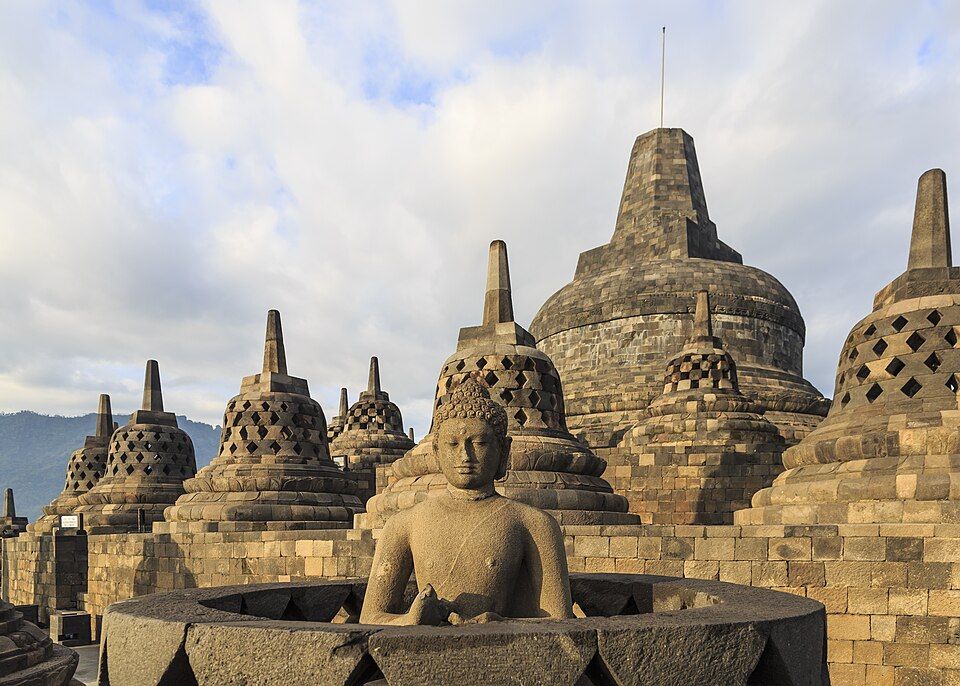
- Buddhist stupas: These dome-shaped structures were physical expressions of Buddhist cosmic order. A stupa’s hemispherical dome represented the Buddha’s ushnisha (the bump on top symbolizing enlightenment). The spire connected earth to heavens, and base levels represented the path to enlightenment. Stupas like the Great Stupa at Sanchi (c. 50 BCE) were designed for circumambulation (walking around them in clockwise circles), turning worship into a meditative journey. The audience — Buddhist pilgrims seeking merit — experienced these structures as paths toward spiritual awakening. This is critical for the exam: stupas served devotional purpose, and their form directly expressed Buddhist theology.
- Buddhist temple sculpture: Stone and bronze figures of the Buddha and bodhisattvas were created to inspire devotion, not merely to decorate. Buddha images from the Gupta period (4th-6th century CE) present serene, meditative figures meant to guide worshippers toward nirvana’s peace. These sculptures were often placed in caves (like Ajanta) or temple sanctuaries where pilgrims would encounter them as focal points for prayer and meditation. The sculptor’s audience was the devoted community seeking enlightenment through visual contemplation.
- Hindu temples as cosmic dwellings: The Hindu temple (like the Brihadisvara Temple in Tanjore, c. 1010 CE) functions as the physical house of a deity. The towering vimana above the sanctum rises toward the heavens, and the inner sanctuary houses the god’s image. For Hindu worshippers, entering a temple was entering the god’s home; the architecture itself was theology. Every sculptural detail — from nymphs adorning the walls to precisely aligned chambers — served the purpose of creating a sacred space where the divine could dwell and devotees could commune with it. This explains why Hindu temples are so visually complex and densely decorated; they needed to express the infinite nature of divinity.
Why this matters for the exam: Test questions often ask why a particular architectural or sculptural choice was made. Understanding that stupas were designed for circumambulation, or that temple sanctuaries housed deity images, explains formal choices that might otherwise seem arbitrary.
Imperial Patronage and Court Art
Emperors and wealthy rulers didn’t commission art for personal decoration — they commissioned it to demonstrate power, establish legitimacy, and control their domains. Recognizing imperial patronage helps you understand the grandeur and purpose behind Asia’s most spectacular works.
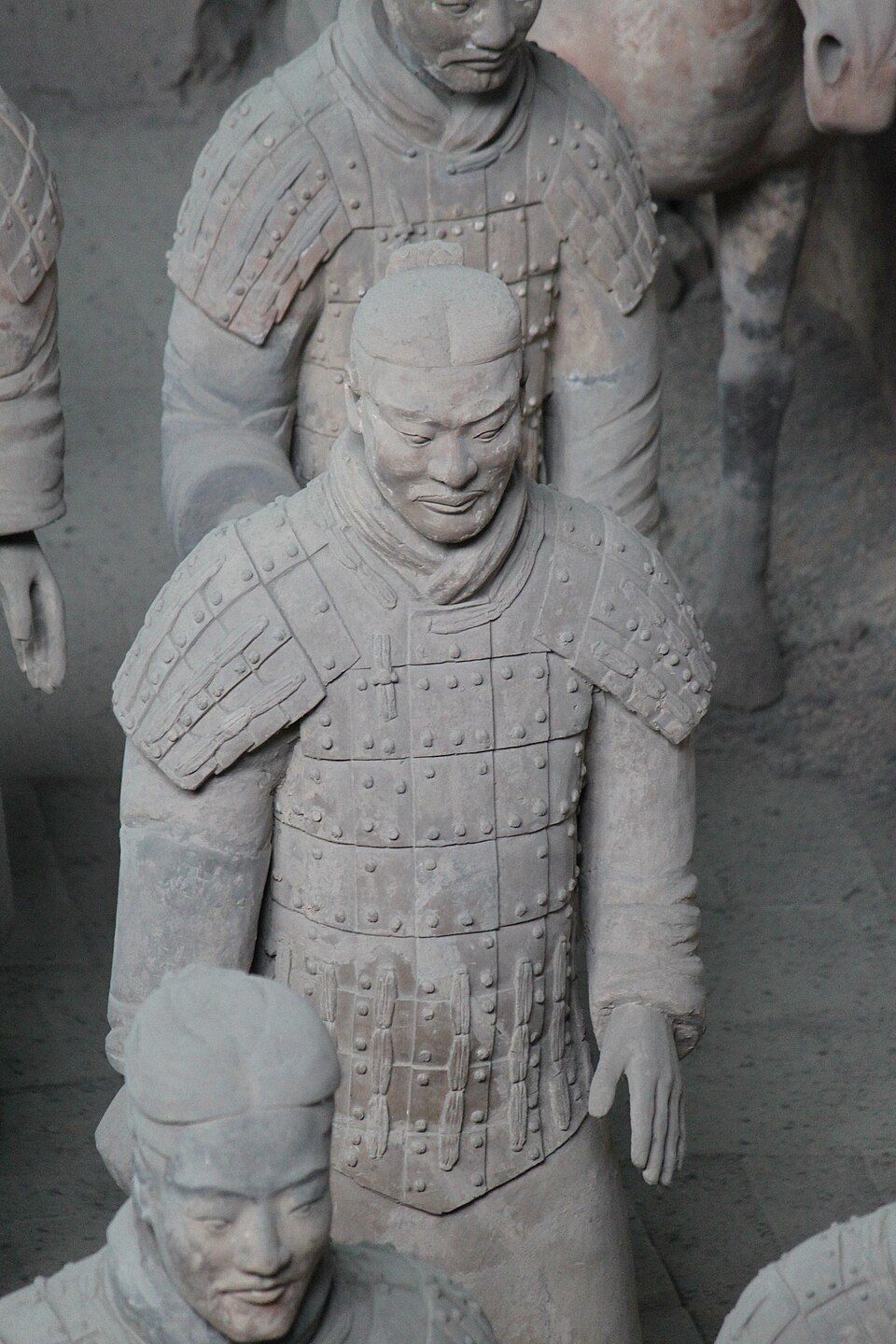
- Chinese imperial painting and calligraphy: Chinese emperors, particularly during the Song dynasty (10th-13th centuries), were often accomplished painters and calligraphers themselves. Landscape paintings served multiple purposes: they demonstrated the emperor’s refined taste, his philosophical education, and his cosmic harmony with nature. A painting of misty mountains wasn’t just beautiful; it expressed the Daoist ideal of retreating from worldly affairs and living in harmony with nature. The audience included court officials, visiting dignitaries, and the emperor himself, all of whom could read the philosophical messages encoded in the work. These paintings hung in imperial palaces and were collected with the intensity of modern collectors.
- Mughal court art: Mughal emperors like Akbar and Shah Jahan (16th-17th centuries) commissioned opulent art to demonstrate their wealth and control. The Taj Mahal stands as the supreme example: built by Shah Jahan as a mausoleum for his wife Mumtaz Mahal, it represents an almost inconceivable expenditure of resources (over 20,000 workers) to create a perfect geometric and spiritual monument. Mughal miniature paintings, made for the imperial court and its closest associates, depicted hunting scenes, court ceremonies, and historical events with meticulous detail and brilliant color. These paintings were status symbols — to view them, you had to be admitted to the emperor’s inner circle. The audience was the elite, and the purpose was to reinforce imperial authority and aesthetic refinement.
- Japanese imperial and shogunal patronage: Japanese emperors and shoguns (military rulers) commissioned temples, gardens, and paintings to consolidate power and demonstrate cultural sophistication. The Golden Pavilion (Kinkaku-ji, 14th century) in Kyoto was built by the shogun Ashikaga Yoshimitsu as a retirement villa that would eventually become a Buddhist temple. It reflects the shogun’s ambition to create a harmonious blend of zen Buddhism, nature, and architecture. Every aspect — the gold leaf covering, the reflected image in the pond, the carefully pruned gardens — served the dual purpose of spiritual retreat and political statement.
Why this matters for the exam: Imperial art is often on the test as free-response questions or as stimulus material in multiple-choice items. Understanding that imperial patronage existed to demonstrate power and legitimacy explains choices like extreme scale, opulence, and placement in politically significant locations.
The Literati Painting Tradition and Philosophical Ideals
In China and later in Japan, scholar-gentlemen created paintings fundamentally different from court art or religious art. These works were created by and for an educated elite who valued philosophy, restraint, and personal expression.
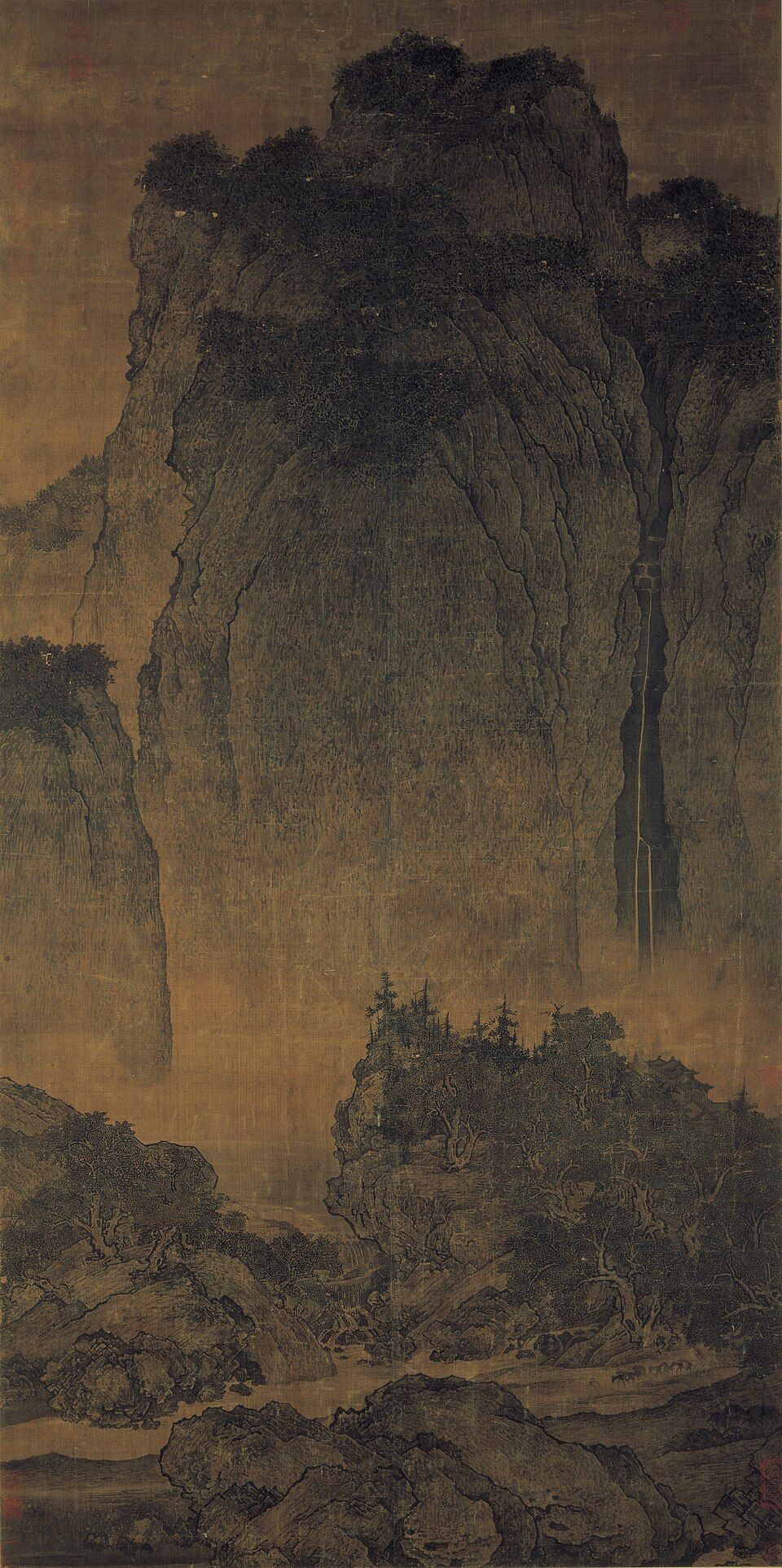
- Scholar-gentleman ideal: By the Song dynasty, literati began creating paintings as expressions of their inner world and philosophical beliefs. Artists like Mi Fu (11th century) created misty, abstract landscapes that departed from the photographic realism of court painters. A literati painting often features sparse brushwork, empty space (negative space was essential), and subjects like old trees, distant mountains, or flowing water. These images weren’t meant to look “finished” or polished; the spontaneity and apparent incompleteness were the point. The loose brushwork demonstrated the artist’s technical mastery by deliberately restraining it — paradoxically, leaving something out required more skill than including everything. The audience was fellow scholars who would view the work and appreciate both the visual poetry and the philosophy embedded in it.
- Literati poetry and painting fusion: Literati paintings often included poems written directly on the work, and the painting itself was meant to be “read” like a poem. Artists like Zhao Mengfu (13th-14th century) blurred the boundary between painting, calligraphy, and poetry. A single work combined visual image, written characters, and philosophical expression. The audience for these works was select and educated; viewing a literati painting was an act of cultural and intellectual participation, not passive enjoyment.
- Japanese literati painting (bunjinga): The literati tradition influenced Japanese artists like Ike no Taiga, who created landscapes that combined Chinese literati philosophy with Japanese aesthetics. These works emphasized harmony between human and nature, restraint in technique, and philosophical depth. They were collected by educated merchants and intellectuals, not primarily by the imperial court or religious institutions.
Why this matters for the exam: The literati tradition represents a shift in artistic patronage and purpose — from court commissions and religious devotion to personal expression and intellectual community. Test questions often ask why an artist made deliberate choices like sparse brushwork or minimal detail; the literati tradition explains that these choices were intentional expressions of philosophy.
Zen Buddhism, Aesthetics, and Everyday Objects
Zen Buddhism introduced a radical new approach to art in East Asia. Rather than creating grand religious monuments or elaborate court paintings, Zen artists found spiritual meaning in simplicity, impermanence, and the beauty of imperfection. This aesthetic influenced everything from architecture to tea ceremony objects.
- Wabi-sabi and imperfection: The Japanese aesthetic principle of wabi-sabi values things that are impermanent, imperfect, and incomplete. A weathered stone, an asymmetrical bowl, a garden partially obscured by mist — these express spiritual truth more powerfully than polished perfection. The tea master’s bowl (chawan) exemplifies this: rough clay, uneven glaze, maybe a crack that was never fully repaired. The audience for such an object — other tea practitioners — would see in that crack not a flaw but evidence of the object’s authenticity and its journey through time. This is a fundamental departure from imperial or court art, which valued technical perfection and expense.
- Zen temple gardens: The Ryoan-ji rock garden in Kyoto (15th century) contains fifteen rocks arranged on raked gravel in what appears to be a simple, almost barren composition. Yet Zen monks and visitors have meditated on this garden for centuries, finding in it profound spiritual meaning. The purpose of the garden wasn’t to display wealth or horticultural skill; it was to create a space for meditation. The sparse arrangement forces the viewer to complete the meaning — to project, to meditate, to find enlightenment in emptiness. The audience was primarily the monastery’s monks, though educated visitors could also participate in this aesthetic experience.
- Tea ceremony objects (chanoyu): The Japanese tea ceremony elevated ordinary tea-making into a spiritual and aesthetic practice. Every object in the tearoom — the tea bowl, the bamboo whisk, the water kettle, the hanging scroll — was selected with extreme care and often by an accomplished artist. An artist like Raku Chojiro (16th century) created tea bowls that were physically crude by conventional standards but spiritually refined. The audience was the tea community: practitioners understood the meaning encoded in each object and appreciated how restraint, impermanence, and authenticity expressed Zen philosophy better than technical perfection ever could.
Why this matters for the exam: Zen aesthetics represent a complete inversion of what makes art “valuable” compared to court or imperial art. Test questions about tea ceremony objects, rock gardens, or simple Zen paintings often test whether you understand that simplicity and imperfection were intentional spiritual choices, not limitations.
Pilgrimage, Merit-Making, and Community Art
Much of South and Southeast Asian art was created not for palaces or emperors but for communities of worshippers. Understanding pilgrimage sites, merit-making donations, and the social function of religious art explains the scale and placement of major monuments.
- Pilgrimage sites and sacred geography: Mountains, river valleys, and temple complexes became pilgrimage destinations where tens of thousands of worshippers traveled to accrue merit and achieve blessings. Angkor Wat in Cambodia (12th century) functioned both as a Hindu temple and a pilgrimage destination. The temple’s massive scale, intricate stone carving, and careful orientation toward cardinal directions were designed to accommodate vast numbers of pilgrims and to embody Hindu cosmology. Every relief sculpture depicting Hindu mythology served the purpose of instructing pilgrims and deepening their spiritual experience. Its patron, however, was King Suryavarman II, who built it as a royal state temple, so it served the king and court as much as any broader community of worshippers.
- Merit-making through donation: In Buddhist and Hindu cultures, donating to temples, creating sculptures, or funding pilgrimages generated spiritual merit that improved one’s current life and future rebirths. This created a powerful incentive for patronage beyond the emperor or the wealthy elite. Merchants, guilds, and even ordinary families would contribute to temple construction or donate sculptural reliefs. The Great Stupa at Sanchi has stone railings donated by merchants; each donor’s name is inscribed on their stone, ensuring that posterity would remember their merit-making act. This democratized art patronage and explains why so much monumental art in Asia is the product of community effort rather than centralized imperial control.
- Court art vs. folk art in Southeast Asia: Southeast Asian kingdoms like the Khmer Empire (9th-15th centuries) produced both court art for the royal family and religious art for the broader population. Temple reliefs at Bayon (late 12th century) depict not only divine subjects but also scenes of daily life: merchants, soldiers, hunters, ordinary people. These reliefs served the dual purpose of religious instruction and social record, showing worshippers that their lives and labor were part of a cosmic order. The audience included everyone — nobles could admire the refined carving and philosophical sophistication, while farmers could see themselves depicted and feel that they too were part of something sacred.
Why this matters for the exam: Understanding that many major monuments were built for pilgrims and communities, not just for rulers, explains why they’re so vast, intricate, and sometimes far from major cities. Exam questions often ask why a temple or stupa was built in a particular location or why it has so many narrative reliefs; the answer often involves pilgrimage, community, and merit-making.
Religious Syncretism and Artistic Purpose
Across South and Southeast Asia, Hinduism and Buddhism coexisted, merged, and influenced each other. This syncretism directly shaped how artists conceived of their work and what purposes they served.
- Hindu-Buddhist synthesis: In Java, Bali, and mainland Southeast Asia, Hindu and Buddhist practices intertwined. The Borobudur temple in Java (8th-9th century) is fundamentally Buddhist in structure and doctrine but incorporates Hindu imagery and cosmological principles. The temple’s mandala shape reflects both Hindu and Buddhist cosmology. Pilgrims ascend through three spiritual zones — the base (depicting worldly desires), the middle (depicting Buddhist virtues), and the top (depicting enlightenment) — a journey that works within both Hindu and Buddhist frameworks. Artists creating for this syncretic audience had to navigate multiple theological traditions simultaneously.
- Royal deification in Cambodia and Southeast Asia: In some Southeast Asian kingdoms, the reigning king was treated as a god-king, often identified with Shiva (Hindu) or the Buddha (Buddhist). Angkor Wat’s original purpose was likely as a temple honoring the king and the god simultaneously. This meant that royal architecture and sculpture served dual purposes: they were monuments to human power and expressions of divine presence. The same sculpture of a deity could function as both a religious image and a political portrait of the king.
- Adaptation and localization: As Buddhism traveled from India to East Asia, artists adapted it to local contexts. Chinese Buddhist temples incorporated Daoist and Confucian elements. Japanese temples blended Buddhism with Shinto practices and aesthetics. This wasn’t haphazard; it was a deliberate artistic choice to make foreign religion meaningful to local audiences. Understanding this syncretism explains why Buddhist art in China looks different from Buddhist art in India, and why Japanese Buddhist art looks different from both.
Why this matters for the exam: The test includes multiple artworks that result from Hindu-Buddhist syncretism or the adaptation of religious traditions. Understanding how artists deliberately blended traditions to serve their audience’s spiritual needs helps you explain visual features that might otherwise seem inconsistent.
Test-Taking Strategies
Mnemonic Devices and Memory Shortcuts
PURPOSE AUDIENCES (P.A.) Framework: When you encounter an unfamiliar artwork from South, East, or Southeast Asia, ask these questions in order:
- Purpose — Why was it made? (Religious devotion, imperial propaganda, personal expression, community merit-making, ceremonial use?)
- Audience — Who was it made for? (Monks, emperors, educated elites, pilgrims, the general public?)
- Audience expectations — What would that audience have valued and understood? (Opulence and technical skill for court art, simplicity and philosophy for literati art, accessibility for pilgrimage art?)
This framework directly addresses learning objective PAA-1.A (identifying purpose and audience) and will help you construct coherent answers on both MCQs and FRQs.
RELIGIOUS FUNCTION Memory Aid: “STUMP” helps you remember the major religious purposes in Asian art:
- Stupas (Buddhist devotion and pilgrimage)
- Temples (Hindu cosmic dwellings, Buddhist monasteries)
- Utensils and objects (Zen tea ceremony, merit-making donations)
- Monuments (imperial tombs, commemorative sculptures)
- Painting (literati philosophy, religious narrative)
Cross-Topic Connections
Topic 8.2 connects directly to:
- Topic 8.1 (Materials, Processes, and Techniques in South, East, and Southeast Asian Art) — You can’t understand purpose without recognizing which artistic tradition you’re working in. A literati painting (Topic 8.1) reflects literati philosophy (Topic 8.2). A stupa’s form (Topic 8.1) expresses Buddhist cosmology (Topic 8.2).
- Topic 8.3 (Buddhist or Hindu philosophy) — The philosophical beliefs examined in Topic 8.3 directly explain artistic choices in Topic 8.2. If an exam question asks why a sculpture depicts a particular gesture or mudra, you’ll need to reference Buddhist or Hindu theology from Topic 8.3.
- Unit 7 context (Islamic art patronage) — Comparing how Islamic courts patronized art versus how imperial Asian courts did helps you understand the specific features of Asian patronage models. Both Units 7 and 8 include imperial patronage questions; the comparison deepens your understanding.
Common Question Formats
Topic 8.2 typically appears in these formats:
- “This artwork was created for [audience]. Which of the following best explains why [visual feature] appears in the work?” The answer will connect a formal feature to the patron’s or audience’s expectations. Example: “This temple was created for Buddhist pilgrims. The narrative relief sculptures serve what purpose? Answer: They instructed illiterate pilgrims in Buddhist doctrine.”
- “Compare the purposes of these two artworks [imperial painting + literati painting].” You’ll need to identify the different patrons, audiences, and values that shaped each work.
- FRQ prompts about patronage — “Explain how the intended audience shaped the artistic choices in [specific work].” You’ll construct an argument using the PURPOSE-AUDIENCE framework.
Frequent Student Mistakes
Mistake 1: Assuming all grandeur is imperial — Students often think that scale and technical complexity necessarily indicate imperial patronage. Reality: Pilgrim-funded temples can be just as vast and elaborate as imperial monuments. The difference is purpose (spiritual vs. political propaganda). The Borobudur is enormous; it was a royal project of the Shailendra dynasty, but it was built for Buddhist pilgrims. Always ask “for whom?” not just “how big?”
Mistake 2: Missing the philosophy in simplicity — Students see a sparse Zen garden or a rough tea bowl and assume these are “primitive” or inferior to ornate court art. Reality: Wabi-sabi simplicity was a sophisticated philosophical choice, not a limitation. A tea master like Raku Chojiro was choosing imperfection deliberately. When you see “simple” Asian art, ask whether simplicity serves a Zen or literati philosophical purpose before concluding the artist lacked skill.
Mistake 3: Confusing “religious art” with “one religion” — Students see syncretic works and get confused about which religion “owns” the artwork. Reality: Many major monuments (Angkor Wat, Borobudur, Southeast Asian temples) served Hindu-Buddhist or multi-faith audiences simultaneously. Don’t force these works into single-religion categories; instead, explain how the artist was addressing multiple audiences and traditions.
Test-Day Shortcuts
- When you see monumental architecture: Immediately consider: Was this built by a ruler (who?), a religious community (which faith?), or both? Check for inscriptions naming donors. The answer often appears in the work itself.
- When you see refined court art (ornate painting, precious materials): Ask what audience values this displays. Imperial and Mughal court art demonstrates wealth, refinement, and power. Literati art demonstrates philosophical sophistication and restraint. These signal different patrons and purposes.
- When you encounter unfamiliar ritual objects: Don’t memorize what they are; instead, identify their purpose from visual cues. A simple clay bowl designed for ritualistic pouring (tea ceremony) likely reflects Zen aesthetics. An ornate metalwork vessel probably served imperial or ceremonial purposes.
- For free-response questions: Always address purpose and audience in separate sentences. Don’t mix them. “This stupa was created by Buddhist communities (audience) to serve as a pilgrimage site and merit-making monument (purpose).” This structure guarantees you’re hitting CUL-1.A and PAA-1.A learning objectives.
Time Management Tips
- MCQs about purpose and audience: Spend 90 seconds max. Use the PURPOSE-AUDIENCE framework to eliminate wrong answers quickly. If an answer choice misidentifies the audience or ignores the purpose, eliminate it immediately.
- FRQs about patronage or purpose: Spend 2-3 minutes on the planning. Jot down the Purpose-Audience-Features framework before you write. This prevents rambling and keeps you on track.
- When you’re unsure: Describe what you see (material, scale, location, audience for similar works) rather than guessing at purpose. A well-reasoned description “This large stone temple was built near a major river valley, suggesting it served pilgrimage communities” will earn partial credit even if you can’t identify the specific religion or purpose.
Check for Understanding
Think you’ve got it? Complete the quiz below to make sure. Download your results at the end.