

Maximize your score with these resources:
- Albert.io AP® US Government question banks
- Free AP® US Government cheat sheets
- Free AP® US Government score calculator
It’s 2024, and a presidential candidate spends $80 million on digital advertising alone—targeting different messages to different voter groups on Facebook while running TV ads in swing states. Behind the scenes, a team of pollsters, media consultants, opposition researchers, and data analysts orchestrates every move. Modern campaigns are high-tech, highly specialized, and fundamentally different from the party-machine campaigns of the past.
This article covers Topic 5.10: Modern Campaigns (Learning Objective PRD-3.E), part of Unit 5—Political Participation. You’ll learn how modern campaigns are structured, who runs them, how technology has transformed political strategy, and the key differences between campaign tactics in primary versus general elections.
The Structure and Evolution of Modern Campaigns
Modern campaigns work fundamentally differently than campaigns from the 1950s. The shift from party-centered elections to candidate-centered elections is one of the most important changes in American politics.
Party-centered elections meant the party apparatus chose candidates, organized volunteers, and controlled the message. In candidate-centered elections, individual candidates build their own campaign organizations, hire their own consultants, and craft their own brands almost independently of party structure.
This shift happened because of several interconnected factors:
- Rise of primaries — Voters, not party bosses, now pick nominees
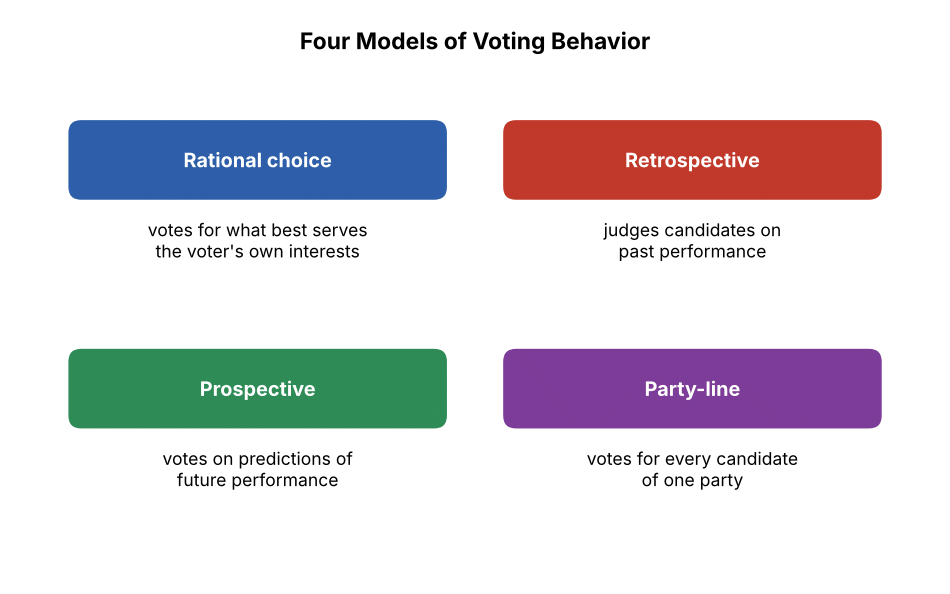
- Decline of party loyalty — Voters switched from voting party-line to voting based on candidate appeal
- Professionalization of campaign staffing — Specialized consultants replaced party volunteers
- Growth of media-driven politics — When a candidate can reach millions through television or social media, they no longer depend on the party to distribute literature door-to-door
The result is the permanent campaign—a constant cycle where elected officials and their challengers perpetually fundraise, poll, and position themselves. Presidents no longer wait until the election year to campaign; they spend their entire term building name recognition and approval ratings for the next election.
| Era | Party-Centered Elections (Pre-1960s) | Candidate-Centered Elections (1970s-Present) |
|---|---|---|
| Candidate Selection | Party leadership and conventions chose nominees; party gatekeepers controlled who could run. | Primary elections open to voters. Candidates build campaigns independently; party support is one factor among many. |
| Campaign Organization | Party machinery provided volunteers, infrastructure, voter contact, and fundraising networks. | Each candidate hires professional consultants, pollsters, media strategists, and digital teams. The campaign is its own organization. |
| Message Control | Party communicated a unified message; individual candidates had less freedom to diverge. | Each candidate crafts their own message and brand. Party messaging is secondary. |
| Voter Contact | Parties knocked on doors, organized rallies, distributed printed materials, and mobilized local volunteers. | Campaigns use TV, digital ads, social media, microtargeting, and data analytics. Personal contact is less frequent but more precisely targeted. |
| Why It Matters | Stronger parties meant more ideologically cohesive coalitions and more legislative predictability. But it also meant less voter choice and more elite control. | Weaker parties mean more candidate autonomy and more direct candidate-voter relationships. But it also means higher costs, more fragmentation, and greater susceptibility to individual personalities and money. |
This structural shift has major implications for governance. When legislators owe their election to their own campaign apparatus rather than the party, they’re less likely to vote with the party on controversial issues. Party discipline has weakened. At the same time, campaigns have become far more expensive, which increases the importance of fundraising and donor relationships.
The Campaign Team: Consultants, Strategists, and Operatives
Modern campaigns run on specialized professionals. Here’s who does what:
- Campaign Manager — Chief strategist and day-to-day leader. Responsible for overall strategy, staffing, budget, and timelines.
- Pollsters and Analysts — Conduct public opinion research to identify persuadable voters and message resonance. They also conduct focus groups to test messaging and analyze microlevel voter data.
- Media Consultants and Ad Producers — Develop television, radio, digital, and social media advertising. They decide which networks, times, and demographics to target. Media buying is one of the largest budget items.
- Digital and Social Media Strategists — Manage the candidate’s online presence, create social media content, run digital ad campaigns, and oversee email fundraising. This role barely existed 20 years ago and is now critical.
- Opposition Researchers — Dig into opponents’ records, past statements, voting history, and personal backgrounds to find material for attack ads and talking points. Opposition research is standard practice.
- Field Organizers and GOTV (Get Out the Vote) Teams — Manage voter registration, phone banking, canvassing, and turnout operations on Election Day.
- Fundraising Director and Finance Manager — Raise money from donors, manage budgets, file required disclosures, and ensure campaign finance compliance.
The professionalization of campaigns means candidates often have limited control over strategy. Your candidate might prefer face-to-face meetings with voters, but consultants insist that TV and digital advertising reach more voters efficiently. This tension between candidate preference and consultant advice shapes modern elections.
Campaign Strategies: Retail vs. Wholesale Politics and Media Dominance
Retail politics means direct, face-to-face candidate-voter interactions: town halls, parade handshakes, door-to-door canvassing, community events. Retail politics is most important in primary elections, where candidates need to stand out and build grassroots support. Iowa and New Hampshire emphasize retail politics; candidates spend months in diners and living rooms building personal connections.
Wholesale politics means mass media appeals: television ads, radio spots, digital advertising, mass mail. Wholesale politics targets large populations efficiently. In general elections, especially in large states, wholesale politics dominates. Your candidate cannot meet every voter face-to-face, so campaigns use media to reach them instead.
The retail vs. wholesale mix varies significantly by race:
- Local races (city council, county offices) — Heavy emphasis on retail politics. Voters expect to see candidates in person.
- State legislative races — Mix of retail and wholesale. Door-to-door canvassing plus media ads.
- Gubernatorial races — Increasingly wholesale. Too many voters for pure retail. Heavy TV and digital presence.
- Presidential primaries — Retail in early states (Iowa, New Hampshire), then shift to wholesale for larger states.
- Presidential general election — Almost entirely wholesale. The campaign is won through ads, debates, and news coverage.
Media has become the primary battleground. Most voters’ impressions of candidates come from television news, political ads, and social media—not from meeting them in person. Campaigns focus intensely on message control. Your candidate wants to define themselves, but they also face scrutiny from opponents and news organizations. A gaffe or controversial past statement can dominate news cycles for days.
Technology and Modern Campaign Tools
Television advertising remains a massive campaign expense, especially in presidential races. TV ads reach broad audiences and allow candidates to define their messages. But TV audiences are shrinking as people cut cable, making digital advertising increasingly important.
Digital advertising and microtargeting represent the new frontier. Campaigns use voter file data, consumer behavior data, and social media platforms to target specific demographic and ideological groups with tailored messages. Facebook, Google, and other platforms allow campaigns to show different ads to different groups—a practice called microtargeting. Your campaign might show one ad about tax cuts to suburban professionals, a different ad about gun rights to rural voters, and a third ad about environmental protection to progressives. This level of customization was impossible before digital advertising.
Social media lets candidates bypass traditional media gatekeepers and communicate directly with supporters. Your candidate’s tweet or Instagram post reaches millions instantly. Social media is also where campaigns identify and mobilize engaged supporters, and where viral moments (positive and negative) happen. It’s free or low-cost compared to TV.
Data analytics and voter modeling underpin modern campaigns. Campaigns combine voter registration data, polling data, consumer data, and social media information to predict which voters are persuadable and how they might respond to specific messages. This data-driven approach lets campaigns allocate resources where they’re most likely to be effective.
Opposition research and negative advertising are standard tools. Digital archives make it easy to find old statements and voting records. Opposition researchers comb through candidates’ pasts, and campaigns use attack ads to define opponents negatively. Negative advertising is controversial but proven effective, especially in races where voters know little about candidates.
Debates remain important moments, especially for presidential races. Debates let voters see candidates side-by-side, assess knowledge and temperament, and compare positions. A strong debate performance boosts standing; a weak one can be damaging. But debates are carefully staged media events with pre-negotiated rules, and campaigns spend weeks preparing.
| Technology | How It Changed Campaigning | Exam Relevance |
|---|---|---|
| Television (1950s-1980s) | Shifted power from party machines to candidates with strong TV presence. A media-savvy candidate could overcome party opposition. Created the modern presidency as a media-centered role. | Know why candidates became independent of parties. Recognize that TV advertising is a major expense. Understand that media-savvy candidates have advantages. |
| Cable News (1990s-2000s) | Created 24-hour news cycles and fragmented campaign narratives. Scandals and gaffes get immediate coverage. Increased pace and intensity of campaigns. | Understand media’s role in shaping candidate image. Know that campaigns try to control the narrative. |
| Digital Advertising and Microtargeting (2010s-Present) | Allowed campaigns to target specific voters with tailored messages. Made campaigns more data-driven. Reduced reliance on broad broadcasts in favor of precise targeting. | Know the difference between broadcast (one message to all) and microtargeted (different messages to different groups). Understand that campaigns use data analytics. Recognize that digital ads are harder to regulate than TV ads. |
| Social Media (2010s-Present) | Allowed candidates to communicate directly without media gatekeepers. Made viral moments possible. Gave supporters ability to amplify or criticize candidates. Created echo chambers and misinformation risks. | Know that candidates use social media to mobilize supporters and control their message. Understand both benefits (direct communication, grassroots mobilization) and risks (misinformation, incivility, algorithmic polarization). |
The Primary and General Election Phases
Campaign strategy shifts dramatically between primary and general elections.
Primary elections pit candidates from the same party against each other. Primary voters tend to be more ideologically committed, more partisan, and more informed than average voters. To win a primary, you appeal to the party base—the most engaged, most ideologically consistent voters. Primary candidates often take stronger ideological positions and use retail politics to build enthusiasm. Campaigns emphasize grassroots organizing, town halls, and direct voter contact.
General elections pit the Republican nominee against the Democratic nominee. Your electorate is broader and less ideologically sorted. Many voters are moderates who decide late and can swing either way. To win a general election, you appeal beyond the base and win persuadable moderates. This often means moderating positions from the primary, emphasizing unifying themes, and using wholesale politics to reach broad audiences.
Candidate pivots are predictable: a candidate who ran hard to the left in a Democratic primary must appeal to moderates in the general. A conservative Republican in a primary must moderate for the general. This shift can create openings for opponents to attack flip-flopping or inconsistency. Campaigns manage this carefully, using language that’s consistent with both positions while giving different emphasis to different audiences.
Test-Taking Strategies
Key frameworks: Remember “CAMP” for key elements of modern campaigns:
- Consultants (media, pollsters, strategists)
- Advertising (TV, digital, social media)
- Message control (opposition research, debates)
- Primary/general phases
Another frame: “From RETAIL to WHOLESALE” captures the shift from face-to-face to mass media as races scale up. For technology, remember that television, digital, and social media remain the top spending categories, while data analytics determines where money goes.
Topic connections: Modern campaigns connect to many Unit 5 topics. You’ll see links to “Voter Turnout” (campaigns try to boost turnout among supporters), “Congressional Elections” (issue-focused ads target Congress), “The Media” (media coverage shapes candidate image), “Electoral College” (presidential campaigns focus on swing states), and “Campaign Finance” (money determines campaign scale).
Common question formats: The exam tests modern campaigns through stimulus-based scenarios. You might see a campaign advertisement and identify its strategy (microtargeting, emotional appeal, positive messaging). You might see campaign spending data and interpret which candidate relies most on wholesale politics. You might see debate excerpts and identify what message the candidate conveyed. You might compare primary vs. general election rhetoric and explain the shift.
Frequent student mistakes: First, students confuse party-centered and candidate-centered elections. Party-centered means the party picks the nominee and runs the campaign; candidate-centered means candidates build their own organizations. Second, students think social media and digital advertising have completely replaced TV and traditional media. They haven’t. TV and cable news still reach the largest audiences and consume the largest budgets, especially in presidential races. Digital is growing and supplementary. Third, students underestimate data and analytics. Modern campaigns are incredibly data-driven; every strategic decision rests on polling and voter modeling.
When you encounter a campaign scenario: Ask yourself three questions: “Is this retail or wholesale politics? Is this a primary or general strategy? Who paid for this advertisement and why?” These questions help you interpret almost any campaign-related stimulus. Remember that campaigns have contradictory goals—high turnout among supporters but low turnout among opponents.
Check for Understanding
Think you’ve got it? Complete the quiz below to make sure. Download your results at the end.