

Maximize your score with these resources:
- Albert.io AP® US History question banks
- Free AP® US History cheat sheets
- Free AP® US History score calculator
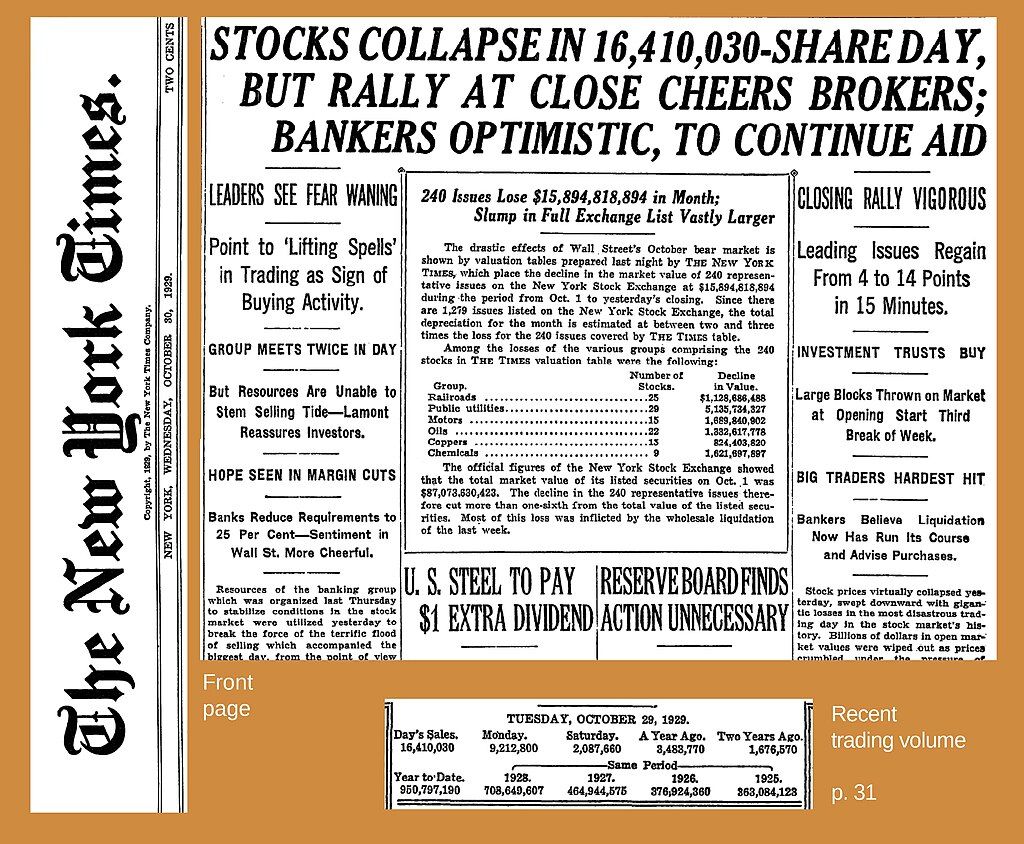
On October 29, 1929, “Black Tuesday,” panicked investors dumped more than 16 million shares on the New York Stock Exchange. Within three years, about one in four American workers had no job, thousands of banks had failed, and families were living in shantytowns named after the president. The Great Depression was the worst economic crisis in American history. Topic 7.9 covers what caused it, how it changed daily life, and why Herbert Hoover’s response fell short.
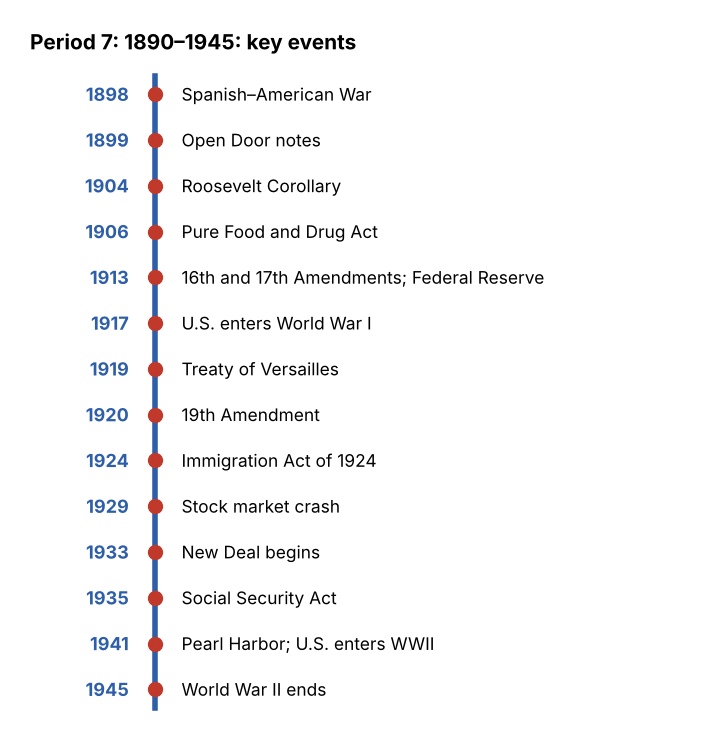
This article covers Topic 7.9: The Great Depression in Period 7, 1890 to 1945. The topic asks you to explain the causes of the Great Depression, its effects on American society, and how the federal government under Hoover responded.
By the end, you should be able to:
- Explain the long-term and short-term causes of the Depression.
- Describe its effects on workers, farmers, and families.
- Evaluate Hoover’s response to the crisis.
- Explain why Franklin Roosevelt won in 1932.

What We Review
Causes of the Great Depression
The stock market crash was a trigger, not the only cause. Deeper weaknesses had been building through the 1920s.
| Cause | Explanation |
|---|---|
| Unequal distribution of wealth | By 1929, the richest 1% of Americans received about a quarter of national income. Most families couldn’t buy all the goods factories produced. |
| Overproduction and underconsumption | Factories and farms produced more than Americans could afford, leading to falling prices and layoffs. |
| Farm crisis | Farmers struggled through the entire 1920s with low crop prices and heavy debt. |
| Easy credit and speculation | Consumers bought on installment plans, and investors bought stocks “on margin” with borrowed money. |
| Weak banking system | Banks were poorly regulated, invested depositors’ money in stocks, and had no deposit insurance. |
| International problems | European nations owed the U.S. war debts and relied on American loans. High U.S. tariffs made it hard for them to sell goods here and repay. |
| Government policy | The Hawley-Smoot Tariff (1930) raised rates sharply, other nations retaliated, and world trade collapsed. |
Effects on American Life
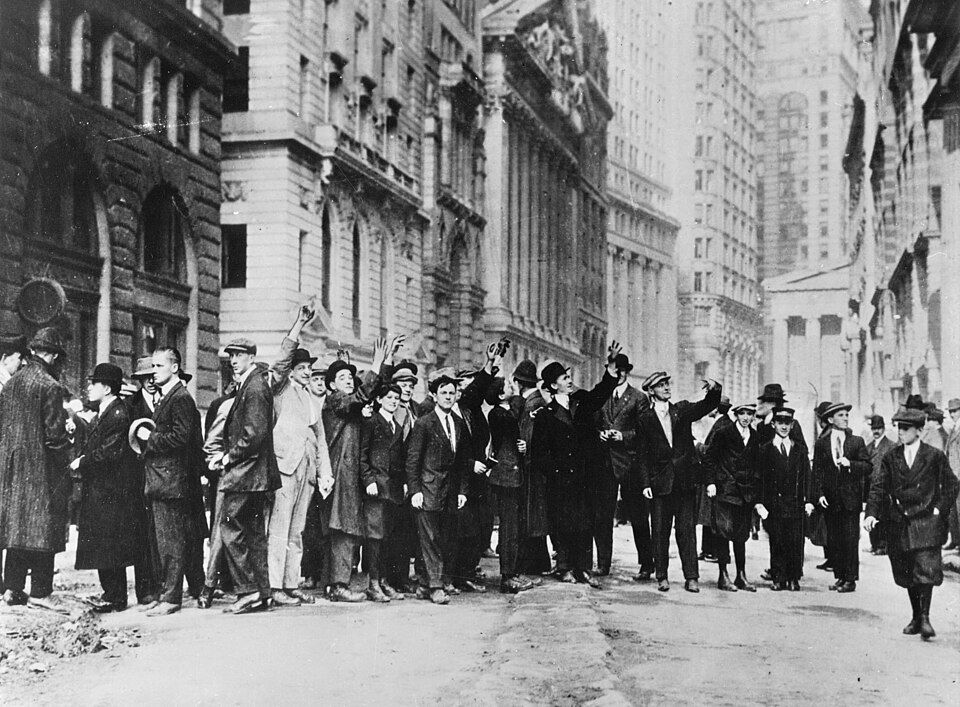
- Unemployment: It rose from about 3% in 1929 to about 25% in 1933.
- Bank failures: Roughly 9,000 banks failed between 1930 and 1933, wiping out savings.
- Homelessness: Shantytowns called “Hoovervilles” grew in cities. Many young men rode freight trains looking for work.
- The Dust Bowl: Drought and poor farming practices turned the southern Great Plains into a wasteland in the 1930s. About 2.5 million people left the Plains states, many of them “Okies” heading to California.
- Family strain: Marriage and birth rates fell. Many women took low-paid work to support families.
- Discrimination: African Americans were often “last hired, first fired.” Mexican Americans faced a repatriation campaign in which hundreds of thousands of people of Mexican descent, by some estimates more than a million, many of them U.S. citizens, were deported or pressured to leave.
Hoover’s Response
President Herbert Hoover believed in “rugged individualism” and feared that direct federal relief would make people dependent on government. He wasn’t idle, though.
| Action | Description | Limitation |
|---|---|---|
| Voluntarism | Asked business leaders to keep wages up and avoid layoffs | Businesses broke these promises as conditions worsened |
| Public works | Funded projects like the Hoover Dam | Too small to offset massive job losses |
| Reconstruction Finance Corporation (1932) | Lent money to banks, railroads, and large businesses | Critics said it helped corporations but not ordinary people |
| Hawley-Smoot Tariff | Protected American industry | Deepened the global slump |
The Bonus Army
In 1932, about 20,000 World War I veterans marched on Washington, demanding early payment of bonuses promised for 1945. Hoover ordered them removed. General Douglas MacArthur’s troops used tear gas and burned their camp. The images badly damaged Hoover’s reputation.
The Election of 1932
Franklin D. Roosevelt, the governor of New York, promised “a new deal for the American people.” He offered few specific plans but projected confidence and a willingness to experiment. He won 42 of 48 states, and Democrats took control of Congress.
Why does this matter? The Depression changed Americans’ expectations of government. Before 1929, most people didn’t expect Washington to fix the economy. After it, many did. On essays, use Hoover’s limited response as a contrast to the New Deal, or use the causes of the Depression to show the weaknesses beneath 1920s prosperity.
Test-Taking Strategies
Mnemonic Devices and Memory Shortcuts
- “Crash was the spark, not the fuel.” Deeper weaknesses caused the Depression.
- “Rich, credit, farms, banks, trade.” Five structural causes to remember.
- “3 to 25.” Unemployment rose from about 3% to about 25%.
Cross-Topic Connections
- Topic 7.7: 1920s consumerism and easy credit set up the crash. See our review of the Roaring Twenties.
- Topic 7.10: The New Deal answered the Depression with direct federal action.
- Topic 6.13: Gilded Age panics in 1873 and 1893 offer a comparison with weaker federal responses.
- Topic 7.11: The Depression pushed the U.S. further toward isolationism.
Common Question Formats
- Stimulus MCQ. A Dorothea Lange photograph or a Hoover speech, and you identify its context.
- Causation SAQ. You explain two causes of the Depression.
- Comparison SAQ. You compare Hoover’s and Roosevelt’s responses.
- LEQ. You evaluate the relative importance of causes of the Great Depression.
Frequent Student Mistakes
- Making the crash the only cause. Graders want structural causes too.
- Saying Hoover did nothing. He took real steps, but he rejected direct relief to individuals.
- Placing the Dust Bowl in 1929. It hit mainly in the mid-1930s.
- Forgetting Mexican repatriation. It’s an important and often-tested example of discrimination.
Test-Day Shortcuts
- Spot “rugged individualism.” That phrase points to Hoover’s philosophy.
- Link tariffs to global collapse. Hawley-Smoot is precise evidence for international causes.
- Use the Bonus Army. It shows why public opinion turned against Hoover.
Time Management Tips
- Multiple choice: Section IA has 55 questions in 55 minutes, about 1 minute each. Economic charts often ask you to read a trend, not exact values.
- Short answer: Section IB has 3 required questions in 40 minutes, roughly 13 minutes each. Use one statistic or named policy in each part.
- Essays: The DBQ gets 60 minutes, including a 15-minute reading period, and the single required LEQ gets 40 minutes. Rank causes in your thesis to show analysis, not just a list.
Check for Understanding
Think you’ve got it? Complete the quiz below to make sure. Download your results at the end.