
Maximize your score with these resources:
- Albert.io AP® US History question banks
- Free AP® US History cheat sheets
- Free AP® US History score calculator
During World War I, Americans were asked to observe “meatless Mondays” and “wheatless Wednesdays.” Posters showed Uncle Sam pointing and saying “I Want YOU.” A socialist leader went to prison for giving an anti-war speech. Hundreds of thousands of Black Southerners boarded trains north for factory jobs. Women took jobs men had left behind and pressed harder than ever for the vote. Topic 7.6 covers how the war transformed life inside the United States.
This article covers Topic 7.6: World War I: Home Front in Period 7, 1890 to 1945. The topic asks you to explain how the federal government mobilized the economy and public opinion, how the war affected civil liberties, and how it changed opportunities for women, African Americans, and Mexican Americans.
By the end, you should be able to:
- Describe how the government mobilized the economy.
- Explain how propaganda and new laws limited dissent.
- Describe the causes and effects of the Great Migration.
- Explain how the war affected the women’s suffrage movement.

What We Review
Mobilizing the Economy
World War I greatly expanded the power of the federal government over the economy.
| Agency or Policy | Leader | What It Did |
|---|---|---|
| War Industries Board | Bernard Baruch | Coordinated industrial production, set priorities, and fixed some prices |
| Food Administration | Herbert Hoover | Encouraged voluntary food conservation and boosted farm output |
| National War Labor Board | William Howard Taft and Frank Walsh | Settled labor disputes and pushed for an eight-hour day to prevent strikes |
| Liberty Bonds | Treasury Department | Raised about $21 billion from Americans to fund the war |
Most of this mobilization relied on voluntary cooperation and partnerships with business rather than direct government control. Union membership grew during the war because the government wanted to avoid strikes.
Shaping Public Opinion
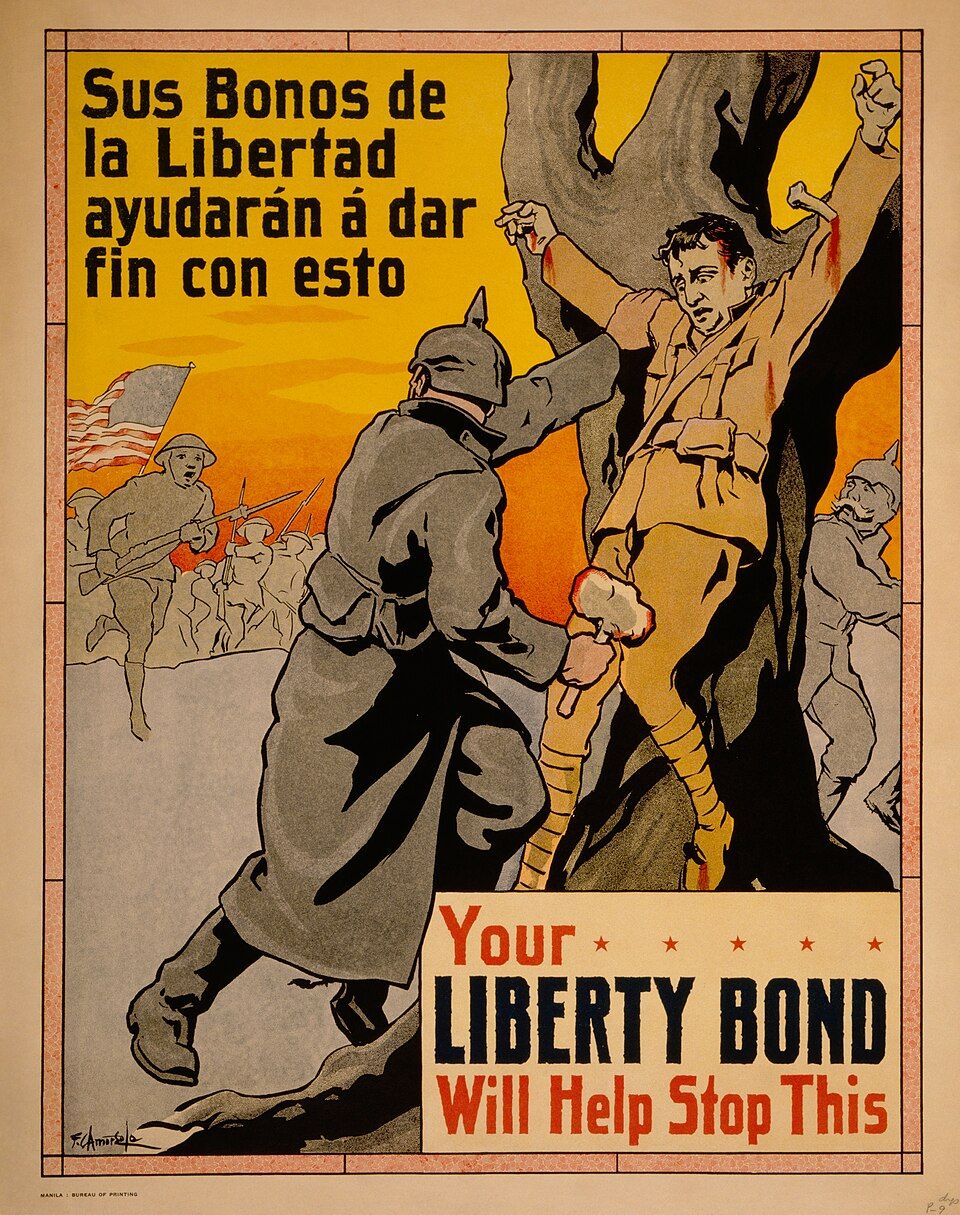
The Committee on Public Information (CPI), led by journalist George Creel, used posters, films, pamphlets, and about 75,000 “Four-Minute Men” speakers to build support for the war. The campaign also fueled hostility toward German Americans. Some schools stopped teaching German, and sauerkraut was renamed “liberty cabbage.”
Civil Liberties Under Pressure
| Law or Case | Year | Effect |
|---|---|---|
| Espionage Act | 1917 | Made it a crime to interfere with the draft or the war effort |
| Sedition Act | 1918 | Made it a crime to criticize the government, the flag, or the military |
| Schenck v. United States | 1919 | The Supreme Court upheld limits on speech that posed a “clear and present danger” |
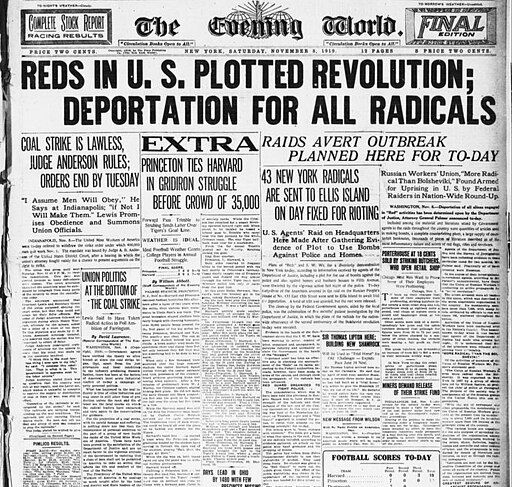
Socialist leader Eugene Debs was sentenced to ten years in prison for an anti-war speech. He ran for president from his cell in 1920 and received nearly a million votes. These wartime restrictions set the stage for the first Red Scare after the war.
New Opportunities and New Tensions
The Great Migration
Wartime factories needed workers, and immigration from Europe nearly stopped. About 500,000 African Americans moved from the South to Northern cities like Chicago, Detroit, and New York between 1915 and 1920.
- Push factors: Jim Crow segregation, lynching, sharecropping debt, and a boll weevil infestation that damaged cotton crops.
- Pull factors: Industrial jobs, higher wages, and encouragement from Black newspapers like the Chicago Defender.
- Tensions: Competition for jobs and housing sparked violence, including the East St. Louis riot of 1917 and the “Red Summer” of 1919.
Mexican Americans
Farm and railroad labor shortages in the Southwest drew tens of thousands of Mexican workers north, many fleeing the violence of the Mexican Revolution.
Women
Women filled jobs in factories, offices, and on railroads, and served as nurses and telephone operators in the military. Suffragists argued that a nation fighting for democracy abroad had to extend it at home. Alice Paul’s National Woman’s Party picketed the White House, while Carrie Chapman Catt’s National American Woman Suffrage Association supported the war effort. Wilson endorsed suffrage in 1918, and the Nineteenth Amendment was ratified in 1920.
Why does this matter? The World War I home front is a powerful example of how war changes a society. It expanded federal power, limited civil liberties, opened economic opportunities, and intensified social conflict. These patterns repeat during World War II, so the two home fronts make an excellent comparison for SAQs and LEQs.
Test-Taking Strategies
Mnemonic Devices and Memory Shortcuts
- “Baruch builds, Hoover feeds, Creel sells.” Industry, food, and propaganda leaders.
- “Spy, then speech.” The Espionage Act came in 1917, the Sedition Act in 1918.
- “Fight for democracy, win the vote.” The war helped push the Nineteenth Amendment through.
Cross-Topic Connections
- Topic 7.5: Military and diplomatic events drove home-front mobilization.
- Topic 7.8: The postwar Red Scare and immigration restriction grew from wartime fears. See our review of 1920s cultural and political controversies.
- Topic 7.4: Progressive reformers saw wartime organization as a model for efficiency. See our review of the Progressive Era.
- Topic 7.12: World War II mobilization repeated and expanded these patterns.
Common Question Formats
- Stimulus MCQ. A CPI poster or an excerpt from Debs’s speech, and you identify its purpose or context.
- Causation SAQ. You explain one cause of the Great Migration.
- Comparison SAQ. You compare the World War I and World War II home fronts.
- DBQ. You evaluate the extent to which World War I changed American society.
Frequent Student Mistakes
- Calling mobilization a government takeover. It relied mostly on voluntary cooperation with business.
- Mixing up Schenck and later cases. Schenck established “clear and present danger” in 1919.
- Dating the Great Migration too late. It began during World War I, around 1915.
- Treating all suffragists the same. Paul used confrontation, while Catt worked with the administration.
Test-Day Shortcuts
- Spot “clear and present danger.” That phrase signals Schenck v. United States.
- Link migration to labor shortages. Wartime industry plus reduced immigration explains the timing.
- Use Debs as evidence. His imprisonment is a concrete example of limits on dissent.
Time Management Tips
- Multiple choice: Section IA has 55 questions in 55 minutes, about 1 minute each. Posters often test purpose and audience, so look at who the poster addresses.
- Short answer: Section IB has 3 required questions in 40 minutes, roughly 13 minutes each. Give one specific group or law per part.
- Essays: The DBQ gets 60 minutes, including a 15-minute reading period, and the single required LEQ gets 40 minutes. Group home-front evidence into economy, civil liberties, and social change.
Check for Understanding
Think you’ve got it? Complete the quiz below to make sure. Download your results at the end.