
Maximize your score with these resources:
- Albert.io AP® Human Geography question banks
- Free AP® Human Geography cheat sheets
- Free AP® Human Geography score calculator
When two cultures meet, several things can happen. One group may adopt part of the other’s culture and keep its own. It may give up its original culture entirely. The two may blend into something new, or they may live side by side and each keep their identity. Geographers have precise names for each outcome, and the AP® Human Geography exam expects you to use them correctly and to explain how they show up on the cultural landscape.
This article covers Topic 3.8: Effects of Diffusion in Unit 3, Cultural Patterns and Processes. The topic asks you to explain how diffusion changes the cultural landscape through acculturation, assimilation, syncretism, and multiculturalism.
By the end, you should be able to:
- Define acculturation, assimilation, syncretism, and multiculturalism and tell them apart.
- Give a real-world example of each, including examples of forced assimilation.
- Explain how each effect changes the cultural landscape.
- Classify a scenario correctly on the exam.
Four Effects of Cultural Diffusion
These four terms describe what happens to cultures after contact. They’re the core vocabulary of this topic.
| Effect | What Happens | Example |
|---|---|---|
| Acculturation | A group adopts some traits of another culture while keeping much of its own. | Immigrant families who speak English at work but their native language at home. |
| Assimilation | A group fully adopts the dominant culture and loses most of its original traits. | Grandchildren of immigrants who speak only English and no longer practice their family’s traditions. |
| Syncretism | Traits from two or more cultures blend to create a new cultural feature. | Día de los Muertos, combining Indigenous Mexican traditions with Catholic holidays. |
| Multiculturalism | Many cultures coexist in one society, each keeping distinct identities. | Canada’s official policy of multiculturalism, adopted in 1971. |
A useful way to picture the differences is to imagine two cultures meeting. Acculturation is borrowing. Assimilation is replacing. Syncretism is blending. Multiculturalism is coexisting.
Acculturation and Assimilation
These two are the most often confused, because they’re points along the same path.
Acculturation is partial change. Immigrants often acculturate quickly in public life. They learn the host country’s language, follow its laws, and adopt some of its customs. At home, they may keep their original language, religion, food, and holidays. Most first-generation immigrants live somewhere in this middle ground.
Assimilation is near-total change. It often happens over several generations. In the United States, a common pattern has been that the first generation speaks the home language, the second generation is bilingual, and the third generation speaks mostly English. Assimilation can be voluntary, as families choose to blend in, or it can be forced.
Forced Assimilation
Governments have sometimes tried to erase minority cultures deliberately. In the United States, federal Indian boarding schools, starting with the Carlisle Indian Industrial School in 1879, removed Native American children from their families, cut their hair, banned their languages, and forced them to adopt Christianity and English. Canada ran a similar residential school system for more than a century. Both governments have since acknowledged the lasting harm these schools caused to Indigenous families and languages.
Why does this matter? The exam may ask you to explain why a minority language declined. Forced assimilation policies are a strong answer, and they connect this topic to language loss in Topic 3.6 and to political geography in Unit 4.
Syncretism: When Cultures Blend
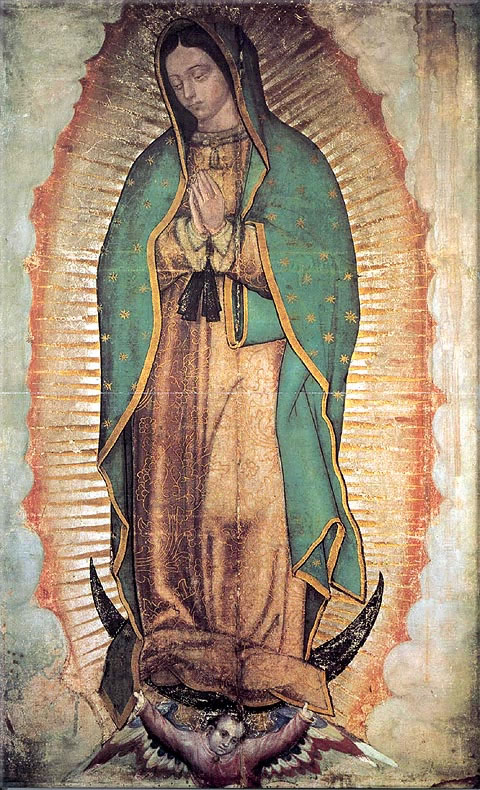

Syncretism creates something new out of two or more cultural traditions. It’s especially common in religion, food, music, and holidays.
- The Virgin of Guadalupe. According to tradition, the Virgin Mary appeared to an Indigenous man named Juan Diego in 1531 on a hill near Mexico City. The site had long been associated with an Aztec mother goddess. Many historians see her image, with its Indigenous features and symbols, as a blend of Catholic and Indigenous traditions. She became a central symbol of Mexican identity.
- Día de los Muertos. Mexico’s Day of the Dead combines Indigenous traditions of honoring ancestors with the Catholic observances of All Saints’ Day and All Souls’ Day on November 1 and 2. Families build altars with marigolds, photographs, and the favorite foods of the dead.
- Santería and Vodou. Enslaved Africans in Cuba and Haiti blended Yoruba and other West African religions with Catholicism. In Santería, African deities called orishas are linked with Catholic saints.
- Food. Tex-Mex cuisine blends Mexican and American cooking. Chicken tikka masala, often called a British national dish, combines South Asian spices with British tastes.
- Music. Jazz grew from African musical traditions, European harmony, and American church music in the port city of New Orleans.
Syncretism often happens where cultures meet under pressure, such as colonialism or slavery. People adopt the outward forms of the dominant culture while keeping older beliefs underneath, and over time the two merge. You can see the historical side of this in our review of the historical causes of diffusion.
Multiculturalism and the Cultural Landscape
Multiculturalism describes a society where different cultural groups keep their own identities while sharing a common civic life. It’s both a description and, in some countries, an official policy.
- Canada became the first country to adopt multiculturalism as official policy in 1971. Toronto is one of the most diverse cities in the world, with nearly half its residents born outside Canada.
- Singapore recognizes four official languages, English, Mandarin, Malay, and Tamil, reflecting its Chinese, Malay, and Indian communities.
- Large global cities like London and New York contain neighborhoods where dozens of languages are spoken within a few blocks.
Multiculturalism has critics as well as supporters. Some argue it can leave groups living separately without much shared culture. Supporters argue that it lets people keep their heritage while taking full part in national life. On the exam, you may be asked to explain either side.
How the Four Effects Change the Landscape
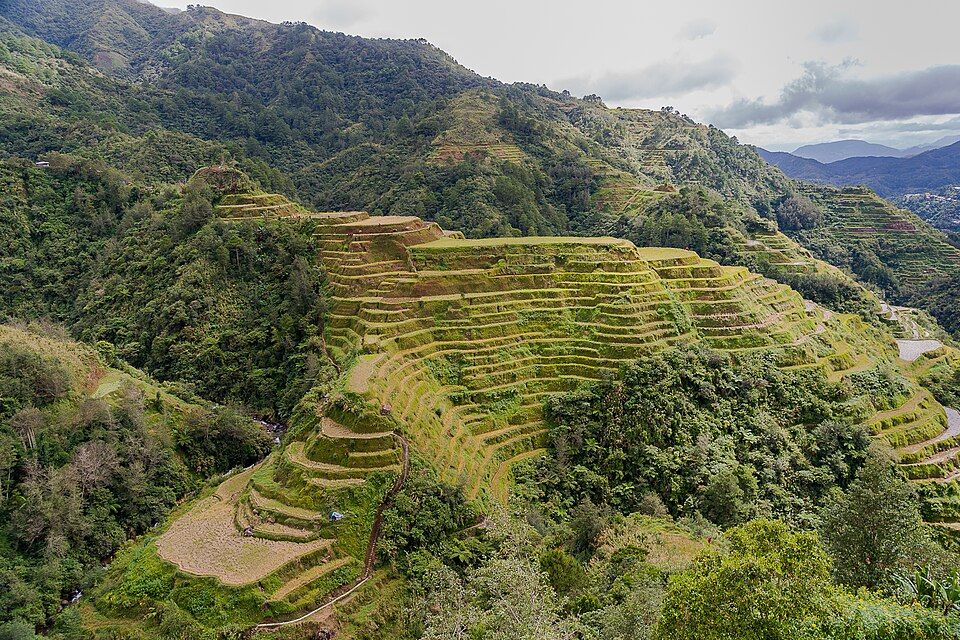
The cultural landscape is the visible imprint of human activity on a place. Each effect of diffusion leaves its own marks, which connects this topic to cultural landscapes in Topic 3.2.
| Effect | Landscape Evidence |
|---|---|
| Acculturation | Bilingual store signs; immigrant-owned businesses selling both local and home-country products. |
| Assimilation | Ethnic neighborhoods that fade as later generations move to suburbs; churches or temples that close or change congregations. |
| Syncretism | Religious art blending two traditions; fusion restaurants; festival decorations that mix symbols. |
| Multiculturalism | Mosques, temples, and churches on the same street; neighborhoods with shops and signs in many languages. |
Test-Taking Strategies
Mnemonic Devices and Memory Shortcuts
- “Borrow, replace, blend, coexist.” Acculturation borrows, assimilation replaces, syncretism blends, and multiculturalism coexists.
- “Syncretism = synthesis.” Both start with “syn,” meaning together. Two traditions come together to make something new.
- “Assimilation absorbs.” The minority culture is absorbed into the dominant one.
Cross-Topic Connections
- Topic 3.6: Globalization and technology drive the contact that produces these effects. See our review of contemporary causes of diffusion.
- Topic 2.12: Migration brings cultures into contact and produces ethnic enclaves, acculturation, and assimilation. See our review of the effects of migration.
- Topic 3.7: Religions often change as they spread, sometimes through syncretism with local beliefs.
- Topic 4.10: Forced assimilation and resistance to it can become centrifugal forces within a state.
Common Question Formats
- Classification MCQ. A scenario describes a holiday that combines two traditions, and you identify syncretism.
- Photo-based MCQ. A photo of a street with signs in several languages asks which effect of diffusion it shows.
- FRQ with a stimulus. A description of immigrant language use across three generations asks you to explain acculturation and assimilation.
- No-stimulus FRQ. You define syncretism and explain how it appears in the cultural landscape.
Frequent Student Mistakes
- Using acculturation and assimilation interchangeably. Acculturation keeps much of the original culture; assimilation loses most of it.
- Calling any mix of cultures syncretism. Syncretism creates a new blended trait. Two cultures living side by side without blending is multiculturalism.
- Forgetting that assimilation can be forced. Government policies like boarding schools are examples of forced assimilation, and the exam may ask about them.
- Leaving out the landscape. When a question asks how diffusion changes the cultural landscape, describe something visible, like signs, buildings, or festivals.
Test-Day Shortcuts
- Ask what happened to the original culture. Partly kept means acculturation. Mostly lost means assimilation. Blended into something new means syncretism. Kept alongside others means multiculturalism.
- Look for generation clues. Questions that compare parents, children, and grandchildren usually test acculturation versus assimilation.
- Look for “combines” or “blends.” These words point to syncretism.
Time Management Tips
- Multiple choice: Classification questions should take 30 to 45 seconds with the four-word framework.
- Free response: Budget about 25 minutes per FRQ. Define the effect in one sentence, then give a specific place-based example and describe what it looks like on the landscape.
- Prepare one example per effect. Immigrant bilingualism, boarding schools, Día de los Muertos, and Canada cover the four terms.
Check for Understanding
Think you’ve got it? Complete the quiz below to make sure. Download your results at the end.