
Maximize your score with these resources:
- Albert.io AP® US History question banks
- Free AP® US History cheat sheets
- Free AP® US History score calculator
What We Review
Effects of the American Revolution: AP® US History Review
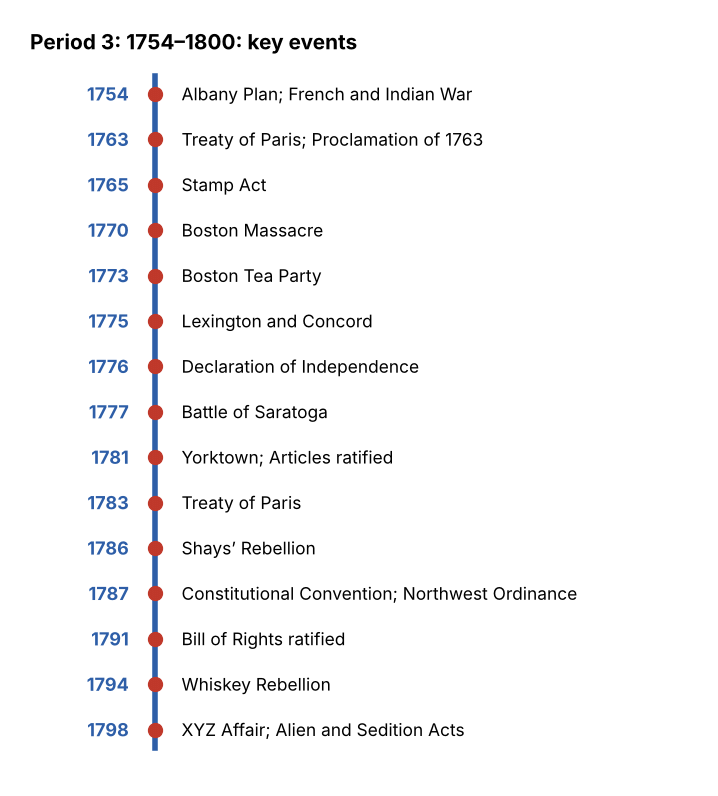
The American Revolution’s impact extends far beyond the battlefield. Revolutionary ideals about freedom, rights, and equality reshaped American society, politics, and eventually inspired movements worldwide. This guide covers exactly how those ideals unfolded—and where they fell short—with the specific examples and vocabulary the AP exam demands.
Revolutionary Ideals and Changes in American Society
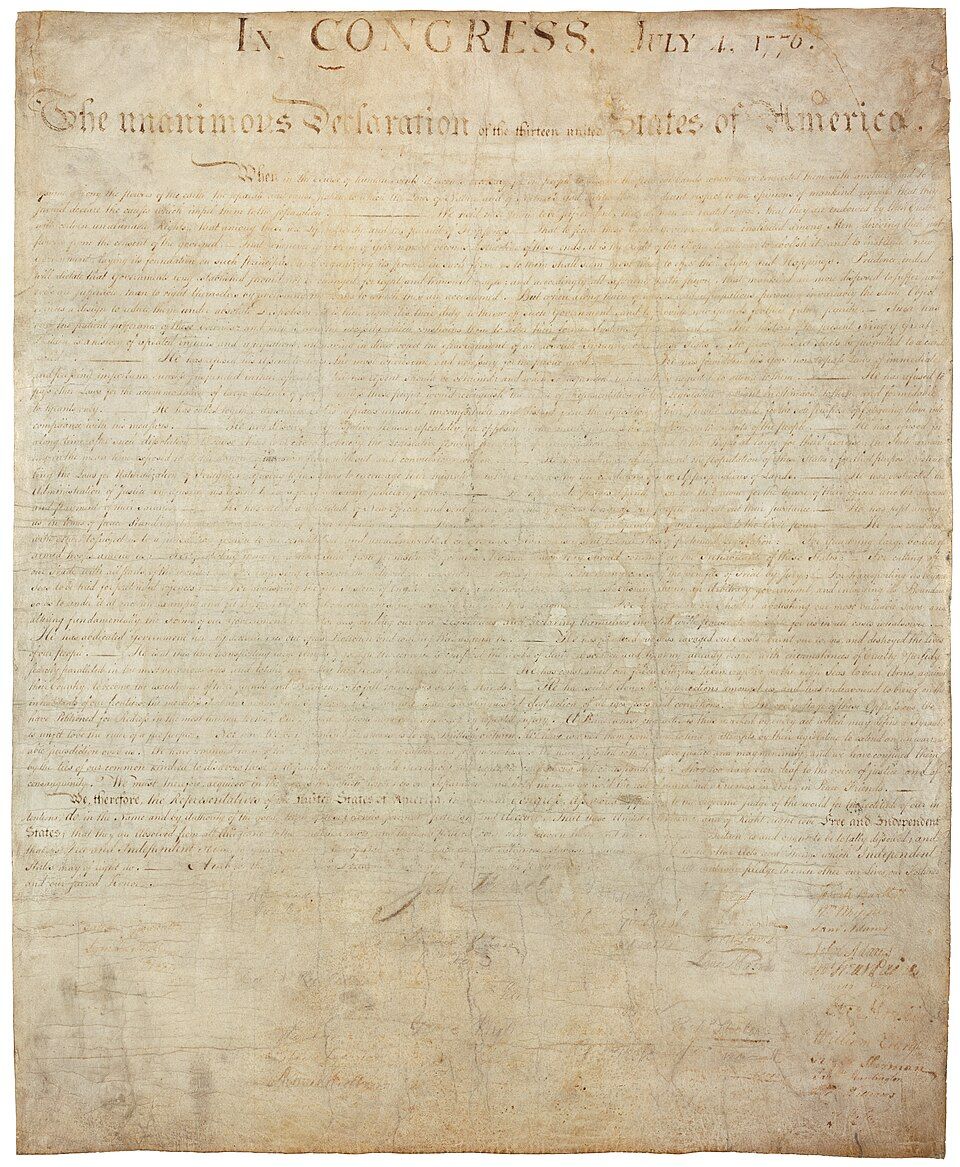
When the Declaration of Independence proclaimed that “all men are created equal,” it forced America to confront a difficult question: How could a nation fighting for freedom permit slavery? This contradiction sparked debates about equality that would define the next century.
Key Effects of Revolutionary Ideals:
- Growing Awareness of Inequalities — The Declaration’s language made slavery’s moral contradiction impossible to ignore, prompting abolitionists to challenge the institution with newfound urgency.
- Abolition Movements Emerge — Northern states began passing gradual emancipation laws, signaling changing attitudes about human rights, even as the South dug in deeper.
- Democratic Demands Intensify — Some Americans pushed for expanded voting rights beyond wealthy landowners, though these efforts faced fierce resistance.
Revolutionary Ideals and the Early Challenge to Slavery
The gap between America’s founding rhetoric and its practice of slavery is one of the AP exam’s most heavily tested concepts. You need to understand how revolutionary ideas both challenged and ultimately failed to dismantle slavery.
How Revolutionary Rhetoric Sparked Debate:
- The Declaration of Independence (1776) proclaimed universal equality—language abolitionists weaponized to expose slavery’s fundamental injustice.
- Activists, clergy, and ordinary citizens leveraged these principles in pamphlets, sermons, and town meetings, asking how a free republic could enslave millions.
- Northern states responded legislatively: Pennsylvania, Massachusetts, and Vermont passed gradual emancipation laws, proving that change was possible (though slow).
- The South refused to budge, protecting slavery through economic dependence on plantation agriculture and deeply entrenched racial hierarchies.
Why Change Stalled:
- Slavery persisted across the South with no meaningful legislative challenge during or immediately after the Revolution.
- Voting rights remained restricted to white male property holders—most Americans had no voice in government despite revolutionary claims of popular sovereignty.
- Women, free Black Americans, and Indigenous peoples were systematically excluded from early democratic reforms—a pattern the AP exam frequently tests.
Republican Motherhood and Women’s Changing Role in the Early Republic
Women played vital roles in the Revolution—as supporters, spies, and combatants—yet retained almost no legal rights. Revolutionary ideals opened a small door for women by redefining their social importance, even if political power remained closed to them.
The Concept of Republican Motherhood:
Republican Motherhood was the idea that women’s primary duty was raising patriotic, virtuous citizens. It sounds limiting (and it was), but it represented a significant shift: women were no longer invisible—they were essential to the republic’s survival.
| Before the Revolution | After the Revolution (Republican Motherhood) |
|---|---|
| Women’s influence confined to domestic sphere | Women recast as essential to republic’s survival as educators of citizens |
| Minimal formal education for women | Girls received basic literacy and moral instruction |
| No public voice or formal role in politics | Moral and civic influence recognized, though still no political rights |
| Women largely invisible in political discourse | Women’s education created foundation for 19th-century women’s rights movements |
Critical AP Exam Point: Republican Motherhood shows how revolutionary ideals both expanded and constrained women’s roles. It’s neither pure progress nor pure limitation—it’s the messy reality of how abstract principles met concrete power structures.
The Global Impact of American Revolutionary Ideals
Revolutionary ideas didn’t stop at America’s borders. From Europe to the Caribbean to Latin America, colonized and enslaved peoples used Enlightenment language and American precedent to launch their own independence movements. This global ripple is a frequent AP exam focus.
| Region | Event / Date | Connection to American Revolution |
|---|---|---|
| France | French Revolution (1789) | Drew direct inspiration from American success; adapted Enlightenment ideals to European context |
| Haiti | Haitian Revolution (1791–1804) | Most radical application—enslaved people used revolutionary logic to found a Black-led republic, abolishing slavery |
| Latin America | Independence movements (1808–1826) | Spanish colonies used American rhetoric; independence often benefited creole elites over Indigenous or enslaved populations |
The Haitian Revolution and the Global Legacy of American Revolutionary Ideals
The Haitian Revolution (1791–1804) is where American revolutionary ideals achieved their most radical expression. Enslaved and free Black people in the French colony of Saint-Domingue weaponized the Declaration of Independence and Enlightenment principles to dismantle slavery and colonialism simultaneously.


If “all men are created equal,” then slavery—the complete denial of human equality—was fundamentally illegitimate. Leaders like Toussaint Louverture used this logic to mobilize the enslaved majority against both slavery and French colonial rule. In 1791, a massive rebellion erupted. Unlike slave rebellions elsewhere, this one succeeded in overthrowing the entire plantation system.
Why This Matters for the AP Exam:
- It radicalized revolutionary ideals: While the American and French revolutions occurred within existing frameworks of racial slavery, Haiti’s revolution directly challenged slavery itself as incompatible with revolutionary principles.
- It terrified slaveholding societies: The success of a Black-led slave rebellion alarmed slaveholders in the American South and Caribbean, leading them to double down on racial slavery as a system.
- It demonstrated ideals’ global power: Haiti showed that Enlightenment language could be appropriated by the dispossessed to challenge oppressive systems—a pattern that would repeat throughout the 19th and 20th centuries.
- By 1804, Haiti became the first Black-led republic and the first modern nation founded by formerly enslaved people—a direct result of applying American revolutionary rhetoric more consistently than America itself.
Quick Reference Vocabulary Chart
| Term | Definition | AP Exam Tip |
|---|---|---|
| Abolition | Movement to end slavery | Connects Periods 3, 4, and 5—know the progression |
| Republican Motherhood | Belief that women raise patriotic citizens | Shows both expansion of women’s education AND limits on their political power |
| Enlightenment | Movement emphasizing reason, science, individual rights | The intellectual foundation for all revolutionary ideals |
| Declaration of Independence | Document asserting American freedom from Britain | Most-tested source in APUSH—know its language and contradictions |
| Haitian Revolution | Successful slave rebellion creating a Black-led republic | Proves how revolutionary ideals spread globally and radicalized beyond their origins |
| Gradual Emancipation | Laws phasing out slavery over time (esp. Northern states) | Shows regional divergence and limits of northern antislavery sentiment |
Test-Taking Strategies
Mnemonic for Revolutionary Effects: HASH
Remember Haitian Revolution (global spread), Abolition debates (slavery contradiction), Social inequality awareness, High-water mark for women’s education (Republican Motherhood). When you see a prompt asking about the Revolution’s effects, run through HASH to ensure you hit all dimensions.
Cross-topic connections the AP exam tests:
- Period 3 → Period 4: Jacksonian Democrats invoked “all men are created equal,” but expanded rights primarily for white men while deepening slavery and removing Indigenous peoples. Same language, opposite application.
- Period 3 → Period 5: Lincoln weaponized the Declaration at Gettysburg to redefine the Civil War as a test of whether a nation based on equality could endure. The war’s meaning hinged on revolutionary ideals.
- Period 3 → Period 8: MLK called the Declaration a “promissory note” that America had yet to cash. Revolutionary language remained powerful across centuries.
Common question formats:
- Stimulus-Based MCQs: You’ll read an excerpt from the Declaration, a colonial pamphlet, or an abolitionist speech. Your task: identify whether the source supports or opposes revolutionary equality, then connect it to broader patterns.
- Short-Answer Questions (SAQs): “Explain how revolutionary ideals changed American society” requires specific examples: gradual emancipation laws in the North, Republican Motherhood expanding education, and the contradiction between rhetoric and slavery’s persistence.
- Document-Based Essays (DBQs): Common topics include slavery debates during the Revolution, women’s roles and expectations, or global revolutions inspired by American precedent. Always show the gap between ideals and practice.
Frequent student mistakes:
- Overstating change: The Revolution didn’t immediately transform society. Show the gradual, uneven, contested nature of change—that’s what earns points.
- Ignoring limits: While rhetoric shifted, many inequalities persisted. The exam rewards understanding that ideals ≠ immediate reality.
- Forgetting the global dimension: The Haitian Revolution is a high-frequency test topic. Master it. It directly demonstrates how American ideals inspired and radicalized movements beyond America’s borders.
- Treating all groups equally: Revolutionary ideals affected women, enslaved people, and Indigenous peoples very differently. Show differentiation in your analysis.
Test-day shortcuts:
- Women + Revolution? → Republican Motherhood. It signals both change (expanded education for girls) and continuity (no political rights). This binary structure makes it perfect for AP short answers.
- Slavery + Revolution? → Emphasize the contradiction between liberty rhetoric and slavery’s persistence. Northern abolition movements AND Southern resistance both matter.
- Haiti, Caribbean, or Latin America in the prompt? → The point is always that American ideals spread globally and inspired revolutions. Make that connection explicit.
Time management: Questions testing revolutionary ideals’ effects measure your ability to trace how abstract principles became concrete (or stalled). Never just list changes—analyze the tension between ideals and reality. That’s where the points are.