

Maximize your score with these resources:
- Albert.io AP® US Government question banks
- Free AP® US Government cheat sheets
- Free AP® US Government score calculator
Freedom of the press is one of the most heavily tested First Amendment topics on the AP® US Government exam. The Supreme Court’s rulings on press freedom define the boundary between democratic accountability and government secrecy. You need to know three landmark cases: Near v. Minnesota, New York Times Co. v. United States (Pentagon Papers), and New York Times Co. v. Sullivan.
This article covers Topic 3.4: First Amendment — Freedom of the Press (Learning Objective LOR-2.E) from Unit 3: Civil Liberties and Civil Rights. Expect this material in both multiple-choice and free-response questions, particularly scenarios asking you to identify whether government action constitutes prior restraint or whether a libel plaintiff meets the actual malice standard.
The Text and Constitutional Foundation
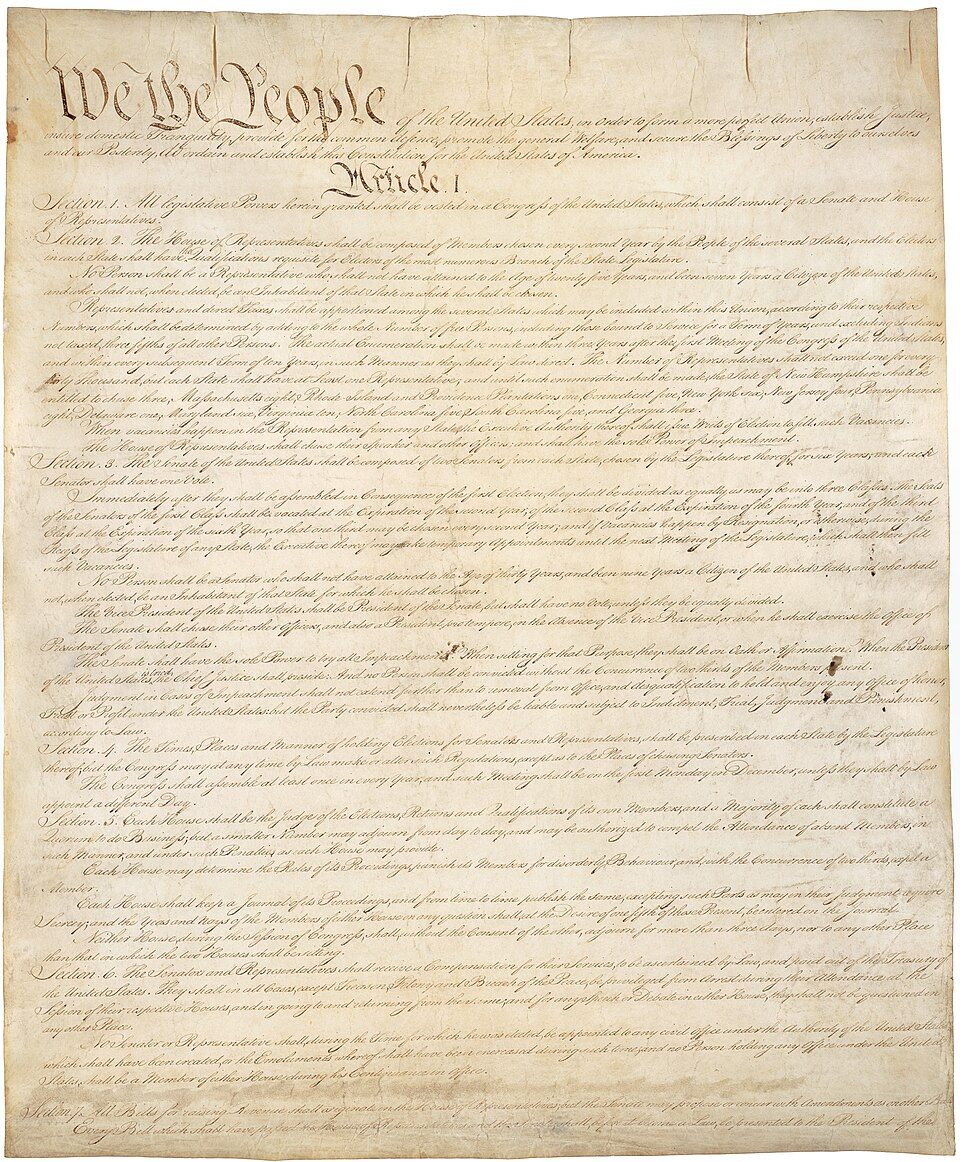
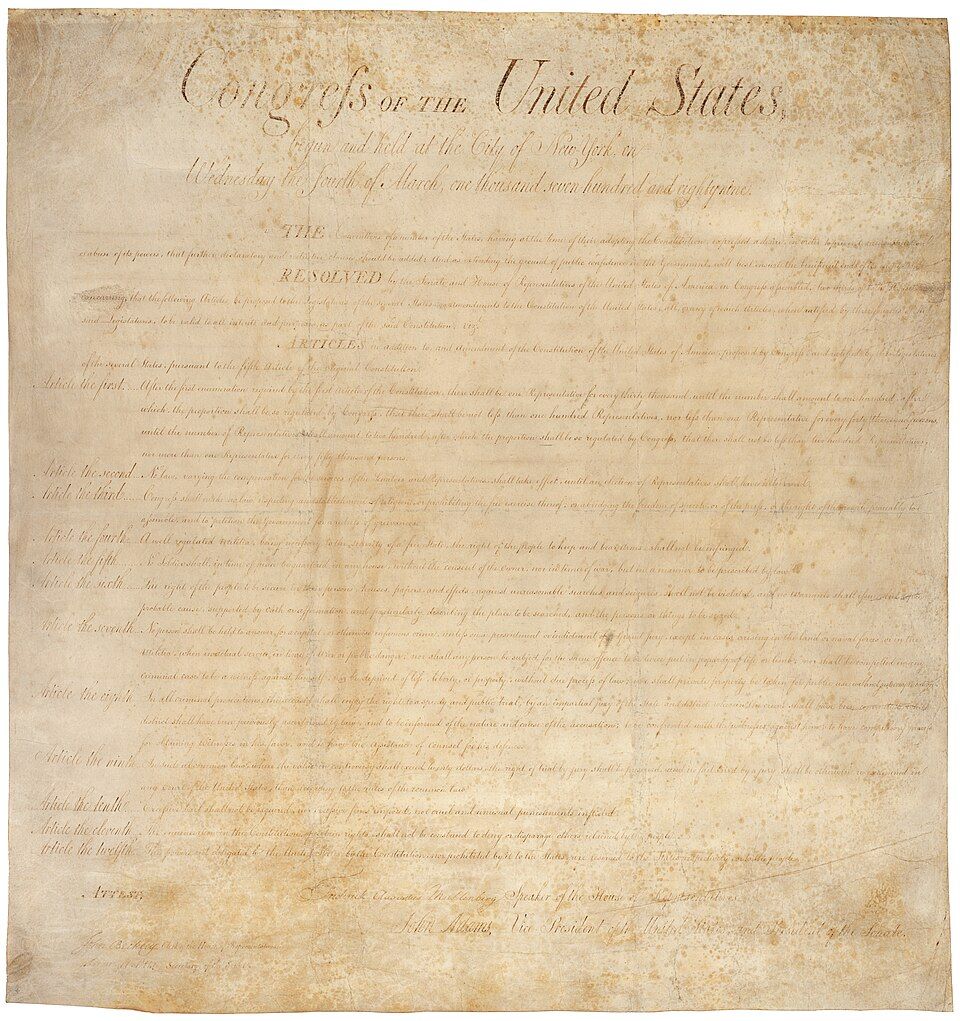
The First Amendment’s press clause: “Congress shall make no law… abridging the freedom of the press.” Those words carry enormous constitutional weight, though their meaning has evolved significantly since ratification.
The Framers likely understood press freedom as protection against prior restraint — government censorship before publication. Modern doctrine protects far more:
- The right to publish without government interference
- The right to gather information and investigate
- Protection of confidential sources (statutory, not constitutional)
- Editorial discretion — freedom to choose what to publish and what to omit
Structural question for the exam: Does the press have special constitutional rights beyond ordinary citizens? Largely “no.” News organizations receive the same First Amendment protection everyone else gets — applied to their particular democratic function. They can’t do things individuals can’t, and they follow the same libel law.
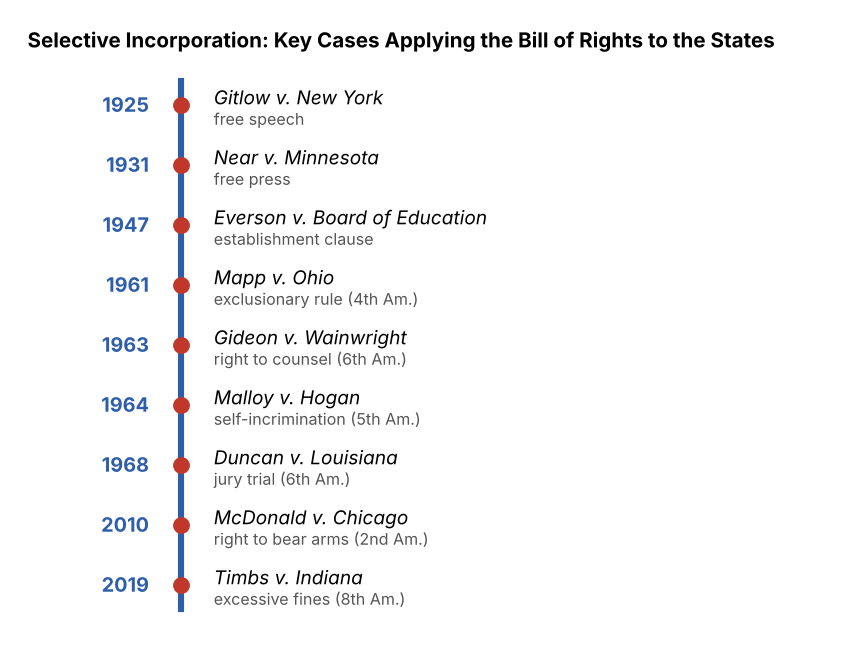
One critical point: press freedom applies to federal government through the First Amendment’s text (“Congress”) and to state governments through the Fourteenth Amendment’s Due Process Clause. This is selective incorporation — a doctrine to connect to other civil liberties topics.
Prior Restraint: The Near v. Minnesota Framework
Prior restraint means government censorship of speech or press before publication. The Supreme Court has held it unconstitutional in nearly all cases — the burden of proof lies entirely on the government.
Near v. Minnesota (1931) established the framework. A Minneapolis newspaper published allegations of corruption and organized crime. Minnesota obtained a court injunction shutting down the paper as a “public nuisance.”
- Holding: Prior restraint — a court order forbidding publication before it happens — is unconstitutional unless government meets an almost impossibly high standard. Government must show harm is imminent, grave, and irreparable, and that no less restrictive alternative exists.
- Key reasoning: The Court didn’t say government can never regulate the press. But preventing publication is the most dangerous form of regulation because it silences speech before the public hears it. If the press publishes something false or harmful, government can sue after the fact for libel. Forbidding publication in advance gets the strictest scrutiny.
- Narrow exceptions: National security in wartime, incitement to violence, and obscenity. But these exceptions are genuinely narrow — the Court has rarely upheld prior restraint even when government claimed national security.
Exam takeaway: Prior restraint is almost per se unconstitutional. The government bears an extraordinarily heavy burden. The premise of the First Amendment is that more speech — even false or harmful speech — is better than government censorship.
The Pentagon Papers and National Security: New York Times Co. v. United States
New York Times Co. v. United States (1971) tested whether national security could justify prior restraint. The Pentagon Papers — a classified Department of Defense study of U.S. involvement in Southeast Asia from 1945 to 1967 — contained material that embarrassed the government and contradicted official narratives about the Vietnam War.
When the New York Times began publishing excerpts from leaked material, the federal government sought an injunction to stop publication, claiming national security harm.
- Core facts: The Times obtained the papers from a whistleblower. The government claimed publication would cause grave harm to the war effort. The Times argued the documents were historical, already known to other governments, and necessary for democratic debate about an ongoing war.
- Ruling (6-3): The government failed to meet its heavy burden for prior restraint. The documents were historical and didn’t reveal methods or plans exploitable in real time. Even genuine national security concerns didn’t justify preventing publication of information the government merely found embarrassing.
- The principle: National security is serious, but it’s not a magic word that automatically triggers censorship. Government must prove actual harm to national defense, not hypothetical harm to reputation or diplomatic interests.
This case shows that the prior restraint doctrine bites deepest precisely when stakes are highest. If the government can’t win an injunction against the Pentagon Papers, it’s almost impossible to win one at all. The Court suggested the proper remedy isn’t stopping publication — it’s prosecuting after the fact (under the Espionage Act or other statutes) if the disclosure violated the law.
Exam connection: You might see an FRQ asking why the government lost despite invoking national security. Explain the burden of proof and the Court’s deep skepticism of prior restraint — even in wartime contexts.
Libel Law and the Actual Malice Standard: New York Times Co. v. Sullivan
Prior restraint prevents government censorship before publication. But what about after? If a newspaper publishes a false statement that damages someone’s reputation, can they be sued for libel? Yes — but with crucial protections for the press.
New York Times Co. v. Sullivan (1964) arose from a civil rights dispute. The Times ran a full-page advertisement describing police actions against civil rights protesters in Montgomery, Alabama. The ad contained factual inaccuracies — for example, it said “truckloads of police armed with shotguns and tear-gas ringed the Alabama State College Campus,” when police had been deployed near the campus but never actually ringed it. The police commissioner sued for libel.
- The problem: Under Alabama law, a publisher was liable for any false statement that damaged reputation — even if the publisher didn’t know it was false. The Times argued this rule chilled free speech: publishers would become afraid to report on public officials because a few innocent mistakes could trigger massive lawsuits.
- Holding: The Court established the actual malice standard for libel involving public officials and matters of public concern. A public official must prove the statement was made with knowledge of falsity or reckless disregard for whether it was true or false. Negligence or ordinary carelessness doesn’t meet this standard.
- Rationale: A lower standard would give officials a powerful tool to silence criticism. Defending even frivolous libel suits is expensive, so newspapers would self-censor. The actual malice standard protects press freedom while still allowing recovery for egregious lies.
The case introduced a key distinction between public figures and private figures:
| Category | Who Qualifies | Libel Standard | Rationale |
|---|---|---|---|
| Public officials | Elected officials, government employees in significant positions | Actual malice (knowledge of falsity or reckless disregard) | Chose public service; must tolerate more criticism; press must be free to report on government |
| Public figures | Celebrities, activists, prominent business leaders | Actual malice (limited-purpose public figures must also prove it for statements about the controversy they entered) | Voluntarily entered public debate; can rebut false statements through media access |
| Private figures | Ordinary citizens not in the public eye | Negligence (lower bar; varies by jurisdiction) | Haven’t chosen the spotlight; deserve more protection from false statements |
Exam application: When you see a libel question, your first move is classifying the plaintiff — public official, public figure, or private figure — then applying the correct standard. Public officials must prove actual malice; private figures usually need only show negligence.
Journalist’s Privilege, Shield Laws, and Source Protection
Press freedom means little if journalists can be compelled to reveal their sources. A source might expose government corruption or corporate wrongdoing — but only if the reporter promises confidentiality. If courts can force reporters to name sources, those sources dry up.
Branzburg v. Hayes (1972) addressed whether journalists have a constitutional right to refuse testimony before a grand jury about their sources.
- Holding: The First Amendment does not grant reporters an absolute privilege to refuse testimony. Reporters, like all citizens, can be compelled to testify before a grand jury if they have relevant information about criminal conduct.
- The legislative response: Nearly all states enacted shield laws — statutes granting journalists protection for source confidentiality beyond what the Constitution requires. Courts can compel testimony only in limited circumstances, such as when the information is crucial to a criminal defense and can’t be obtained otherwise.
- The broader principle: Constitutional rights are sometimes a floor, not a ceiling. States can provide extra protection through legislation even when the Constitution doesn’t mandate it.
Exam tip: If asked about journalist’s privilege, cite Branzburg for the constitutional rule (no absolute privilege), then mention shield laws as the statutory remedy. The Constitution doesn’t guarantee source protection, but state legislatures have stepped in.
Digital Media, Corporate Consolidation, and Modern Press Freedom Challenges
The landmark cases arose in the era of print newspapers and broadcast television. Modern press freedom doctrine grapples with new challenges:
Digital media and new platforms: Courts have generally extended press freedom protections to digital publishers — bloggers, independent journalists, social media reporters. The medium doesn’t matter; the function does. If you’re publishing factual information to the public, you’re engaging in press-type activity. But digital platforms raise questions about algorithmic curation and disinformation that courts are still working through.
Corporate consolidation: A handful of corporations own most newspapers, television stations, and digital news outlets in the United States. This raises democratic concerns:
- A corporate owner might suppress coverage that hurts its business interests
- Concentrated ownership limits the diversity of voices reaching the public
- But the First Amendment constrains government, not private corporations. A media company can decline to publish a story or slant coverage however it wants — that’s editorial discretion, not censorship in the constitutional sense
Misinformation: The First Amendment generally protects false statements — even lies are speech. The remedy is counter-speech and fact-checking, not government suppression. This creates tension in a digital age where misinformation spreads instantly and can influence elections, public health, and national security.
Exam connection: Questions about modern press challenges test whether you understand the limits of the First Amendment. It constrains government action — not private corporate decisions, not social media platform policies, not editorial choices by news outlets.
Test-Taking Strategies
Mnemonics and Memory Shortcuts
“NNB” — the three landmark press cases: Near v. Minnesota (prior restraint is unconstitutional), New York Times v. United States (national security doesn’t override prior restraint ban), New York Times v. Sullivan (actual malice standard for public officials). The progression: government can’t censor before publication (Near), can’t censor even for national security (Pentagon Papers), and faces a high bar suing after publication (Sullivan).
“KR” for Actual Malice: Knowledge of falsity or Reckless disregard. If you remember “KR,” you can explain the Sullivan standard on any question. Negligence is NOT enough — the publisher must have known the statement was false or been reckless about checking.
“Floor Not Ceiling”: Branzburg says the Constitution doesn’t require journalist’s privilege, but states can add it through shield laws. The Constitution sets the minimum protection (the floor); legislatures can build higher (the ceiling).
Cross-Topic Connections on the AP Exam
- Selective incorporation (Topic 3.7): Press freedom applies to states through the Fourteenth Amendment. A question might combine press freedom with incorporation doctrine — asking whether a state injunction against a newspaper violates the First Amendment.
- Freedom of speech (Topic 3.3): Speech and press freedoms overlap but aren’t identical. A question might ask you to distinguish press freedom (news organizations publishing) from general speech freedom (individuals protesting). Standards differ slightly in some contexts.
- Federalism and state power: Shield laws illustrate how states can provide protections beyond constitutional minimums — a concept connecting to broader federalism themes in Unit 1.
Common Question Formats You’ll See
Prior restraint scenarios: Government tries to stop publication (injunction against a newspaper, court order against a broadcaster). The answer is almost always “unconstitutional” — cite Near and the Pentagon Papers case. Government rarely meets the burden.
Libel fact patterns: A false statement about a public official or figure. Can they sue? Identify the plaintiff type (public official, public figure, or private person), then apply the correct standard. Public officials = actual malice; private figures = negligence.
Source protection questions: Can a journalist refuse to reveal sources? Cite Branzburg (no constitutional privilege), then note shield laws as the statutory remedy.
Modern challenges: Digital media, misinformation, platform liability. Remember: the First Amendment constrains government, not private platforms or corporations. A social media company can moderate content; the government (nearly always) cannot.
Frequent Student Mistakes to Avoid
Mistake 1: Confusing prior restraint with libel law. Prior restraint stops speech before publication (almost never allowed). Libel law addresses false speech after publication (allowed, with protections). The Court tolerates one but not the other — this distinction drives most press freedom questions.
Mistake 2: Assuming all false statements are unprotected. The First Amendment protects most false speech. Liability for falsehood requires meeting the Sullivan standard — mere falsity alone isn’t enough for public officials to recover damages.
Mistake 3: Overstating journalist’s privilege. Branzburg explicitly rejected a constitutional right to protect sources. Shield laws are legislative, not constitutional. Don’t write that the First Amendment “guarantees” source protection — it doesn’t.
Mistake 4: Forgetting to classify plaintiffs in libel questions. Categorizing as public official, public figure, or private figure is half the battle. Do this first, then apply the corresponding standard.
Mistake 5: Confusing First Amendment constraints with private action. The First Amendment constrains government, not newspapers’ editorial choices, not social media platform moderation, not corporate ownership decisions. A news outlet can suppress a story; that’s not censorship in the constitutional sense.
Test-Day Shortcuts That Work
Shortcut 1: The Near presumption. On prior restraint questions, start with the presumption that government loses. Unless the question explicitly describes wartime troop movements or imminent violence, the answer is that prior restraint is forbidden.
Shortcut 2: Classify the plaintiff first in libel questions. Public official → actual malice. Public figure → actual malice. Private figure → negligence. This single classification step determines the entire analysis.
Shortcut 3: Remember the hierarchy. Prior restraint faces strictest scrutiny (almost always unconstitutional) → Libel law faces high scrutiny for public officials (actual malice) → Other press regulations face intermediate or strict scrutiny depending on content.
Shortcut 4: Use the government action test for modern questions. Does the First Amendment apply? Ask: Is this government action? If a private company moderates content, no. If government censors speech, yes. This frame eliminates distractor answers quickly.
Time Management for the AP Exam
MCQs on press freedom usually hinge on one principle: Is it prior restraint? Is the plaintiff a public official? Was there actual malice? Identify the key principle in the question stem and eliminate answer choices that apply the wrong standard. Budget 30-45 seconds per question.
FRQs on press freedom: Structure your answer as: (1) State the relevant doctrine and case, (2) Apply the standard to the facts given, (3) Reach a conclusion. This three-step structure earns maximum points efficiently. Budget 5-7 minutes per FRQ part.
Don’t get stuck on gray areas. If you can’t decide whether someone is a public or private figure, explain both standards briefly and state which you think applies. Full points come from demonstrating you know the doctrine — not from resolving every ambiguity perfectly.
Check for Understanding
Think you’ve got it? Complete the quiz below to make sure. Download your results at the end.