

Maximize your score with these resources:
- Albert.io AP® US History question banks
- Free AP® US History cheat sheets
- Free AP® US History score calculator
What We Review
Philosophical Foundations of the American Revolution: A Study Guide for AP® US History
The American Revolution wasn’t just a military conflict—it was an intellectual revolution first. Before the first shot fired at Lexington and Concord, colonists had already undergone a dramatic shift in how they thought about power, rights, and the purpose of government. These ideas, drawn from Enlightenment philosophy, religious traditions, and decades of self-governing experience, became the intellectual backbone of the American Revolution.
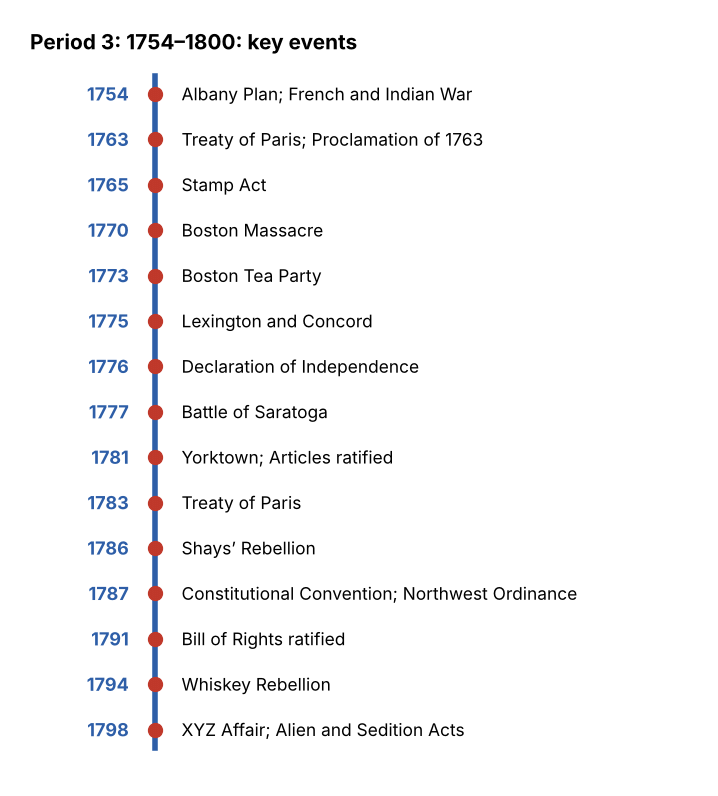
This topic sits at the heart of AP® US History Period 3 (1754–1800) and connects directly to CED Topics 3.4 and 3.5. The exam frequently tests your ability to trace how abstract ideas—like natural rights and the social contract—translated into concrete political action.
Changing Colonial Attitudes About Government and the Individual
Early colonial society mirrored European hierarchies. Colonists saw themselves as loyal British subjects, accepted that social rank was determined by birth, and believed kings ruled by divine authority. But colonial life itself began eroding these assumptions.
Three forces drove the intellectual shift:
- Self-governing experience: Town meetings in New England and elected colonial assemblies gave ordinary colonists a taste of political participation. By the mid-1700s, many colonies had been managing their own local affairs for over a century.
- Spread of literacy and print culture: Rising literacy rates and the explosion of pamphlets, newspapers, and sermons meant that Enlightenment ideas reached a far wider audience than in Europe. Coffeehouses and taverns became informal debating halls.
- British imperial crackdowns: After the French and Indian War (1763), Britain tried to reassert control through new taxes, trade restrictions, and limits on westward expansion. Colonists who had governed themselves for decades experienced these policies as an abrupt rollback of established freedoms.
Critical AP Insight: Colonial resistance wasn’t about taxes alone. It was a fundamental clash between Britain’s top-down imperial authority versus the colonists’ lived experience of bottom-up self-rule. When the exam asks about “changing attitudes,” connect the abstract (Enlightenment ideas) to the concrete (colonial assemblies, Stamp Act protests, committees of correspondence).
The Influence of Enlightenment Ideas
The Enlightenment was an intellectual movement emphasizing reason, individual rights, and skepticism of traditional authority. Its core argument: governments should be evaluated by whether they serve the people they govern, not by tradition or divine right.
| Thinker | Key Idea | Key Work | Impact on Colonists |
|---|---|---|---|
| John Locke | Natural rights (life, liberty, property); people may overthrow governments that fail to protect those rights | Two Treatises of Government (1689) | Directly inspired the Declaration; gave colonists a moral framework for revolution |
| Baron de Montesquieu | Separation of powers among branches prevents tyranny | The Spirit of the Laws (1748) | Shaped the U.S. Constitution’s structure (legislative, executive, judicial) |
| Jean-Jacques Rousseau | Government derives legitimacy from the “general will” of the people | The Social Contract (1762) | Reinforced the idea that political authority flows upward from citizens |
Three Enlightenment Concepts That Mattered Most:
- Natural Rights: Every person is born with inherent rights—life, liberty, and property—that no government can legitimately take away. This directly contradicted the idea that rights were privileges granted by a king.
- The Social Contract: Governments are created by the people through a voluntary agreement to protect natural rights. If government fails, the contract is broken and the people may form a new government.
- Separation of Powers: Concentrating all authority in one person or body invites tyranny. Power must be divided among separate branches that check one another.
Why Locke Mattered Most: Locke’s argument that people have a right—even an obligation—to overthrow a government that violates their natural rights gave colonial leaders the intellectual ammunition they needed. When Jefferson wrote that governments derive “their just powers from the consent of the governed,” he was paraphrasing Locke almost word for word.
The Role of Religion in Shaping American Views
Religion and Enlightenment philosophy reinforced each other in the colonies, creating a uniquely American blend of political thought.
Puritan Contributions to American Political Culture:
- Congregational self-governance: Puritan churches were governed by their own members, not by bishops or a centralized hierarchy. This church structure became a template for town meetings and local political control.
- Covenant theology: Puritans believed communities were bound by mutual obligations—a religious version of the social contract. Winthrop’s “city upon a hill” framed the colonies as a moral experiment in collective self-governance.
- Individual moral accountability: Every person was responsible for their own relationship with God. This emphasis translated into expectations of active civic participation.
The First Great Awakening (1730s–1740s): Itinerant preachers told ordinary people they could experience God directly—no priest, no bishop, no king required. The Great Awakening’s democratizing message had explosive political implications: if you didn’t need a priest to mediate your relationship with God, why did you need a king to mediate your relationship with government?
Republicanism and the Colonists’ Belief in Government by the People
Republicanism—the belief that government should be based on the consent of the governed, with elected representatives serving the public good—became the dominant political philosophy of the Revolutionary generation. No text spread these ideas more effectively than Thomas Paine’s Common Sense (1776).


Paine’s core arguments:
- Hereditary monarchy is absurd. No person has a natural right to rule others simply because of their bloodline.
- Britain harms the colonies. The economic and military relationship benefits Britain, not America.
- Independence is inevitable. The colonies have outgrown British control; reconciliation is fantasy.
- A republic is superior. The people should create a government based on written law and elected representation.
Common Sense sold approximately 500,000 copies in a country of 2.5 million people. It transformed the debate from “How do we fix our relationship with Britain?” to “Why would we stay?”
The Declaration of Independence as a Culmination of Philosophical Ideas
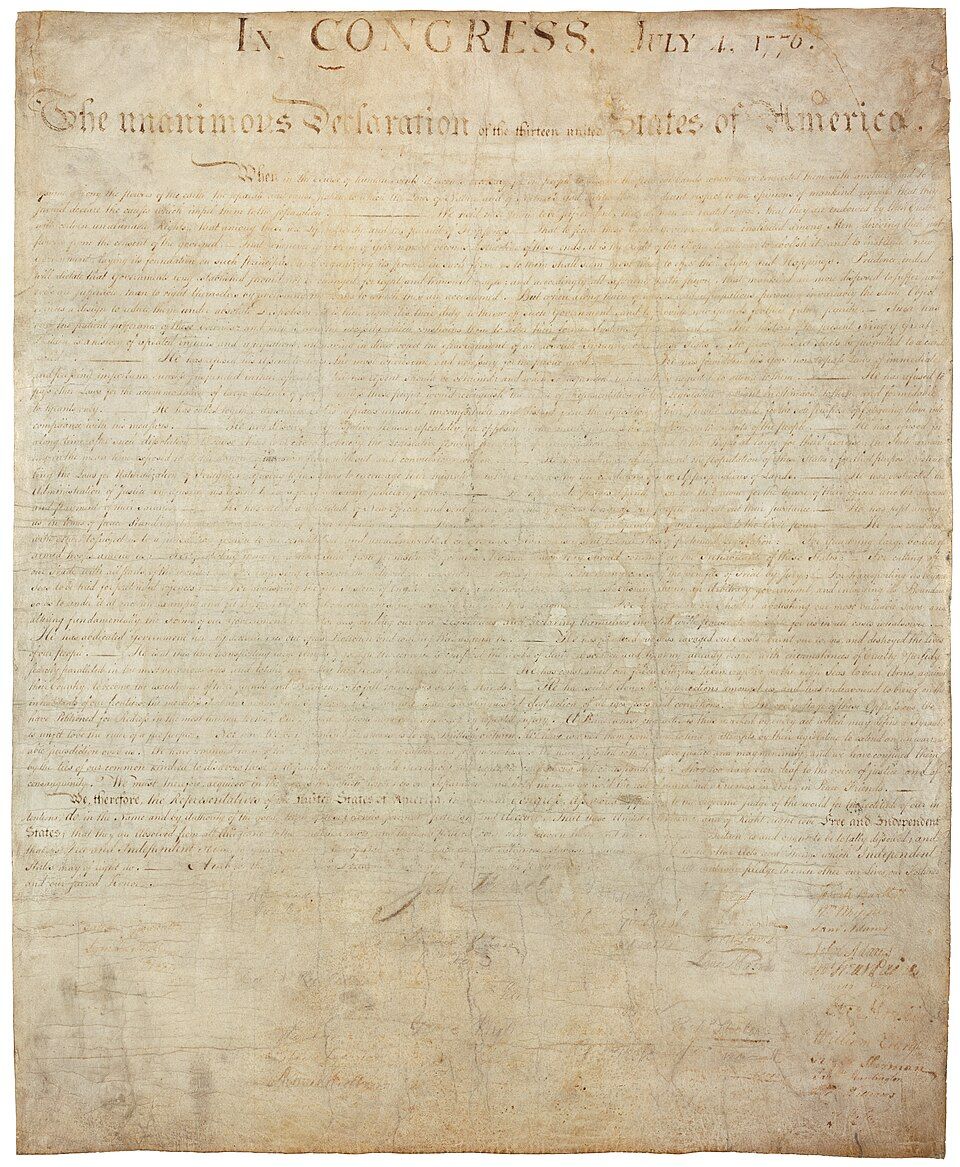
The Declaration of Independence (July 4, 1776) synthesized decades of intellectual development. Jefferson’s key philosophical claims map directly onto Enlightenment ideas:
| Declaration’s Language | Enlightenment Source | Significance for AP Exam |
|---|---|---|
| “All men are created equal” | Locke’s natural rights theory | Rejects hereditary hierarchy and divine right of kings |
| “Unalienable Rights… Life, Liberty and the pursuit of Happiness” | Locke’s “life, liberty, and property” | Jefferson changed “property” to “pursuit of happiness” to broaden the appeal beyond property owners |
| “Consent of the governed” | Social contract theory (Locke, Rousseau) | Government legitimacy comes from the people, not God or tradition |
| “Right of the People to alter or abolish” destructive government | Locke’s right of revolution | Provides the moral and legal justification for breaking from Britain |
Long-Term Impact of These Philosophical Foundations
- The U.S. Constitution (1787): Montesquieu’s separation of powers became the structural blueprint. Three co-equal branches with checks and balances—a direct application of Enlightenment political theory.
- The Bill of Rights (1791): Codified natural rights protections—freedom of speech, religion, assembly, and due process.
- Expansion of democratic participation: The logic of “all men are created equal” proved difficult to contain. Successive generations used the Declaration’s language to argue for abolition, women’s suffrage, and civil rights.
- Global influence: The French Revolution (1789), Latin American independence movements (1810s–1820s), and democratic movements worldwide drew directly on the American model.
Quick Reference Chart: Important Vocabulary and Definitions
| Term | Definition | AP Exam Significance |
|---|---|---|
| Natural Rights | Inherent rights belonging to all people: life, liberty, and property (Locke) | Foundation of the Declaration; tested in DBQs about Revolutionary ideology |
| Social Contract | Agreement among people to form a government that protects their rights | Key concept for explaining why colonists believed revolution was justified |
| Republicanism | Political system where power resides with the people, who elect representatives | Central to understanding post-Revolutionary state constitutions and the federal Constitution |
| Enlightenment | 17th–18th century intellectual movement emphasizing reason, individualism, and skepticism of authority | Connects to multiple periods; provides intellectual framework for American political development |
| Common Sense | 1776 pamphlet by Thomas Paine arguing for independence and republican government | Frequently appears in stimulus-based MCQs; know Paine’s main arguments |
| Declaration of Independence | 1776 document declaring independence and outlining natural rights philosophy | The single most-tested document in APUSH; know its structure and philosophical sources |
| Separation of Powers | Dividing government into branches to prevent concentration of authority | Connects Enlightenment theory to Constitutional structure |
| Consent of the Governed | Government’s legitimacy depends on the approval and participation of the people | Core concept linking social contract theory to colonial grievances about representation |
| Right to Revolution | The people’s right to change or overthrow a government that fails to protect their rights | Locke’s most radical idea; directly cited in the Declaration |
| First Great Awakening | 1730s–1740s religious revival emphasizing personal faith and challenging religious authority | Democratized religious experience; created culture receptive to Revolutionary ideas |
Test-Taking Strategies
Mnemonic: LENS
Remember Locke’s natural rights, Enlightenment rationalism, Natural law tradition (religious roots), Social contract theory. When a question asks about the “philosophical foundations” of the Revolution, run through LENS to ensure you’re covering all the bases.
Cross-topic connections the AP exam tests:
- Period 3 → Period 4 (1800–1848): The same natural rights language used to justify independence became a weapon in the hands of reformers. Abolitionists and women’s rights advocates cited the Declaration relentlessly. Watch for DBQ questions pairing Enlightenment rhetoric with later reform movements.
- Period 3 → Period 5 (1844–1877): Lincoln explicitly invoked the Declaration at Gettysburg. The Civil War was partly a fight over what the founding philosophy actually meant.
- Period 3 → Period 8 (1945–present): MLK called the Declaration a “promissory note” that America had failed to honor. Enlightenment ideals are living tools in ongoing American political debate.
Common question formats:
- Stimulus-based MCQs: Match quotes to thinkers. Language about “rights,” “consent,” “compact,” or “tyranny” → Locke. “Branches” or “balance” → Montesquieu. “The people’s will” → Rousseau.
- SAQs: “Explain how Enlightenment ideas influenced colonial resistance.” Show (1) the specific Enlightenment idea, (2) the specific thinker, (3) a specific example of how colonists applied it.
- DBQs: Look for Enlightenment language (“natural rights,” “consent,” “tyranny,” “liberty”) as evidence of philosophical influence. Watch for sources showing tension between Enlightenment ideals and reality (slavery)—these are goldmines for analytical essays.
Frequent student mistakes:
- Treating the Enlightenment as a single idea rather than distinct concepts (natural rights, social contract, separation of powers). Be specific about which concept you’re discussing.
- Forgetting the role of religion. The Great Awakening contributed to Revolutionary thinking alongside Locke and Montesquieu. They reinforced each other.
- Confusing Locke’s wording with Jefferson’s. Locke wrote “life, liberty, and property”; Jefferson wrote “life, liberty, and the pursuit of happiness.” Know that Jefferson deliberately changed this and why.
- Treating the Declaration as mostly rhetoric. It’s a legal and philosophical document with three parts: philosophical justification, list of specific grievances, formal declaration of independence.
Test-day shortcuts:
- “Consent of the governed” or “right to revolution” → Locke and the social contract
- “Branches of government” or “checks and balances” → Montesquieu and separation of powers
- “Religious revival challenging authority” → Great Awakening and its connection to democratic ideals
- Declaration’s three parts: philosophical justification (natural rights), list of grievances (specific wrongs), formal declaration (we’re independent). Address all three for a stronger response.
Time management: Enlightenment questions tend to be straightforward if you know your thinkers. Don’t overthink MCQs—match the quote to the concept and move on. For DBQs, identify the core philosophical concept in each document, explain how it justified colonial action, then note contradictions between ideals and reality. That third step separates good essays from excellent ones.