
Maximize your score with these resources:
- Albert.io AP® US Government question banks
- Free AP® US Government cheat sheets
- Free AP® US Government score calculator
The federal bureaucracy employs millions of people, spends trillions of dollars, and writes rules that carry the force of law. Almost none of its employees are elected. That raises an obvious question: if voters can’t fire them, who makes sure agencies follow the law and serve the public? The answer is the other three players in the system. Congress, the president, and the courts each have tools to hold the bureaucracy accountable, and the AP® U.S. Government and Politics exam expects you to know them well.
This article covers Topic 2.14: Holding the Bureaucracy Accountable in Unit 2, Interactions Among Branches of Government. The topic asks you to explain how the three branches check the bureaucracy and why those checks don’t always work as intended.
By the end, you should be able to:
- Explain how Congress uses oversight, funding, and legislation to control agencies.
- Describe the president’s appointment, removal, and management powers over the bureaucracy.
- Explain how courts review agency actions.
- Identify why accountability is difficult, including the tension between expertise and political control.
Congressional Oversight
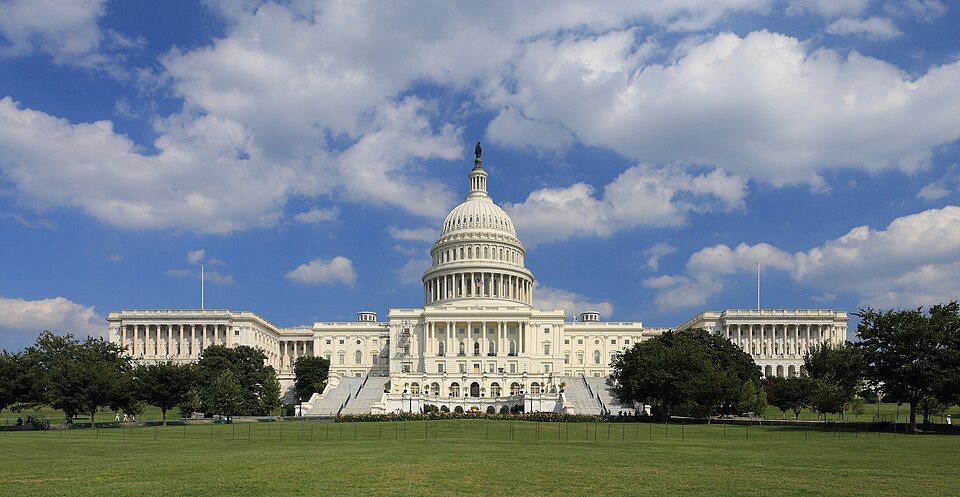


Congress created every federal agency and funds every one of them, which gives it the broadest set of tools. The general term for Congress’s monitoring of the bureaucracy is oversight.
| Tool | How It Works | Example |
|---|---|---|
| Oversight hearings | Committees call agency officials to testify, and can subpoena documents and witnesses. | In 2014, hearings on hidden wait lists at veterans’ hospitals led to a new law expanding veterans’ access to care. |
| Power of the purse | Congress sets each agency’s budget and can cut funding or attach conditions to how money is spent. | Appropriations bills often include riders that forbid an agency from spending money on a specific activity. |
| Rewriting the law | Congress can expand, narrow, or eliminate an agency’s authority by changing the enabling statute. | Congress abolished the Civil Aeronautics Board in the 1980s after deregulating the airline industry. |
| Confirmation | The Senate approves top agency officials before they take office. | Senators often use confirmation hearings to extract promises about how an agency will be run. |
| Congressional Review Act | Congress can overturn a new regulation with a joint resolution, subject to presidential veto. | Congress used it heavily in 2017 to repeal a batch of rules issued at the end of the previous administration. |
Congress also has its own watchdogs. The Government Accountability Office (GAO) audits agency spending and performance, and the Congressional Budget Office (CBO) estimates the costs of proposed laws. Inside most agencies, independent inspectors general, created by the Inspector General Act of 1978, investigate waste, fraud, and abuse and report to both the agency head and Congress.
Why does this matter? Oversight is uneven. Committees tend to investigate aggressively when the other party controls the White House and gently when their own party does. On the exam, if a question asks when oversight is most intense, the answer usually involves divided government.
Presidential Control
The president is the chief executive, so the bureaucracy technically works for the president. In practice, a president has only a few years and a few thousand political appointees to direct a workforce of millions. These are the main tools:
- Appointments. Presidents choose cabinet secretaries, agency heads, and thousands of other political appointees. Picking loyal leaders with the right policy views is the most direct way to steer an agency.
- Removal. Presidents can fire most executive officials at will. Leaders of some independent agencies have been protected by laws that allow removal only for cause. The Supreme Court upheld such limits in Humphrey’s Executor v. United States (1935) but has narrowed them since, as in Seila Law v. CFPB (2020), which let the president fire the head of the Consumer Financial Protection Bureau at will. How far the president’s removal power reaches is still being fought over in the courts.
- Executive orders. Presidents direct agencies on how to carry out laws and what to prioritize. A new president often signs dozens in the first weeks, reversing the predecessor’s directions.
- Budget and regulatory review. The Office of Management and Budget (OMB) prepares the president’s budget proposal and reviews major regulations before agencies finalize them, which lets the White House block or reshape rules.
Why does this matter? Presidential control explains why agency rules swing with each new administration. It also explains a frequent exam theme: the bureaucracy is supposed to be professional and nonpartisan, yet it answers to an elected, partisan leader.
Judicial Review of Agency Actions
Anyone harmed by an agency decision can challenge it in federal court. Judges ask several questions:
- Did the agency act within the authority Congress gave it? If a rule goes beyond the statute, courts strike it down. Since Loper Bright Enterprises v. Raimondo (2024), judges decide for themselves what an unclear law means instead of deferring to the agency.
- Did the agency follow proper procedures? The Administrative Procedure Act requires notice and public comment for most rules. Skipping required steps can void a rule.
- Was the decision reasoned? Courts can reject actions that are “arbitrary and capricious.” In Department of Commerce v. New York (2019), the Court blocked a citizenship question on the census because the reason the agency gave didn’t match the evidence.
- Is the action constitutional? Agency actions must respect constitutional rights like due process and free speech.
Courts can only act when someone brings a case, so judicial review is reactive. It catches many problems, but only after they happen. You can see how these limits developed in our review of discretionary and rule-making authority.
Why Accountability Is Hard
Even with all these tools, the bureaucracy is difficult to control. Several forces work against accountability.
- Civil service protections. The Pendleton Act of 1883 replaced the spoils system with hiring based on merit. Career employees can’t be fired for political reasons, which protects expertise and professionalism but makes rapid change hard.
- Expertise gaps. Agency specialists often understand their programs far better than the politicians overseeing them, which makes it hard for Congress or the White House to second-guess them.
- Iron triangles. Agencies, the congressional committees that oversee them, and the interest groups they regulate can form stable, cooperative relationships. When all three benefit from the status quo, oversight tends to weaken. See our review of interest groups and iron triangles.
- Size and complexity. No committee or president can watch every program. Oversight tends to focus on scandals and headlines, not routine performance.
Transparency laws help fill the gap. The Freedom of Information Act (1966) lets the public request government records, and the Whistleblower Protection Act (1989) shields employees who report misconduct. The press and interest groups use both to expose problems that Congress can then investigate.
| Branch | Main Tools | Biggest Limitation |
|---|---|---|
| Congress | Hearings, budgets, rewriting laws, confirmation | Oversight depends on partisan incentives and staff time. |
| President | Appointments, removal, executive orders, OMB review | Civil service rules protect most career employees. |
| Courts | Reviewing rules for authority, procedure, and reasoning | Can only act when someone with standing sues. |
Test-Taking Strategies
Mnemonic Devices and Memory Shortcuts
- “Congress watches, the president steers, the courts referee.” Congress oversees, the president directs, and the courts decide disputes about legality.
- “Money, meetings, and mandates.” Congress controls agencies through funding, oversight hearings, and the laws that define their mandates.
- “Hire, fire, direct.” The president’s three main powers over agencies are appointments, removals, and executive orders.
Cross-Topic Connections
- Topic 2.12: The structure of cabinet departments, independent agencies, and government corporations determines how much control each branch has. Review it in our article on the bureaucracy.
- Topic 2.13: Rulemaking and discretion are the powers these checks are aimed at.
- Topic 2.2: Committees do most oversight work, so this topic connects to how Congress is organized.
- Topic 1.6: Oversight of the bureaucracy is checks and balances applied to the part of government that carries out the law. See our review of the principles of American government.
Common Question Formats
- Tool identification MCQ. A scenario describes a committee hearing, a budget cut, or an executive order, and you identify which branch is checking the bureaucracy and how.
- Concept application FRQ. A news passage describes a scandal at an agency. You explain how Congress could respond and how the president might respond differently.
- Quantitative analysis FRQ. A chart shows the number of oversight hearings over time. You describe the trend and connect it to divided or unified government.
- Comparison MCQ. A question asks which check is most effective in a specific case, such as reversing a new rule quickly (the Congressional Review Act) versus changing an agency’s direction (appointments).
Frequent Student Mistakes
- Assuming the president can fire anyone in the bureaucracy. Most career civil servants have job protections, and some independent agency leaders have legal limits on their removal.
- Treating oversight as neutral. Oversight is shaped by party politics. Expect more hearings when Congress and the White House are controlled by different parties.
- Forgetting that courts need a case. Judges can’t review a rule on their own initiative. Someone harmed by it has to sue.
- Mixing up the GAO and the CBO. The GAO audits how agencies spend money. The CBO estimates what proposed laws will cost.
Test-Day Shortcuts
- Identify the actor first. Is it a committee, the White House, or a judge? The actor tells you which branch’s tools apply.
- Look for “subpoena,” “hearing,” or “appropriations.” These words point to congressional oversight.
- Connect scandals to hearings. When a stimulus describes an agency failure, the most common response is an oversight hearing followed by new legislation.
Time Management Tips
- Multiple choice: Tool identification questions take 30 to 45 seconds. Save time for comparison questions, which require weighing two plausible checks.
- Concept application FRQ: Spend about 20 minutes. Name a specific tool for each part (“the House Oversight Committee could subpoena the agency’s records”) instead of general phrases like “Congress could investigate.”
- Quantitative analysis FRQ: State the trend with numbers from the chart first, then give one clear explanation tied to a course concept.
Check for Understanding
Think you’ve got it? Complete the quiz below to make sure. Download your results at the end.