
“Nevermore.” In Edgar Allan Poe’s “The Raven,” a single word returns at the end of stanza after stanza, each time sounding more hopeless. By the end, the repetition has become almost unbearable, and that is exactly the point. Repetition is one of the oldest tools in poetry, used in chants, songs, prayers, and speeches. It creates rhythm, builds emotion, and tells readers what matters most.
This article covers Topic 3.9: Repetition and Refrain in Unit 3, Figurative Language and Sound. The topic asks you to identify types of repetition, including refrains, anaphora, and epistrophe, and to explain how repetition creates emphasis and meaning.
By the end, you should be able to:
- Define repetition and refrain.
- Identify anaphora, epistrophe, and other patterns of repetition.
- Explain how repeated words can change meaning over a poem.
- Analyze the effect of repetition on rhythm, mood, and theme.
Repetition and Refrain
Repetition is the use of the same word, phrase, line, or structure more than once. A refrain is a line or group of lines that repeats at regular intervals, usually at the end of stanzas, like the chorus of a song.
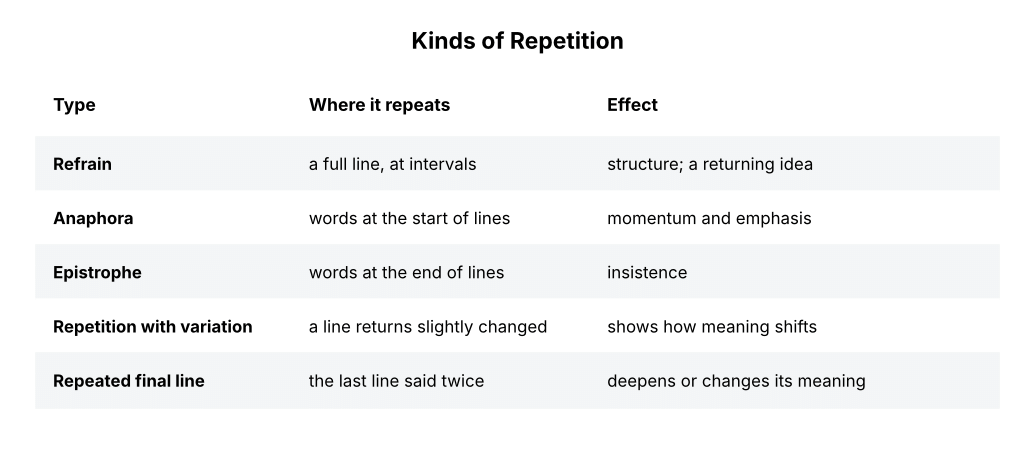
Refrains appear in ballads, songs, villanelles, and many other forms. Poe’s “Nevermore” works like a refrain: the raven’s one-word answer closes many stanzas.
Types of Repetition
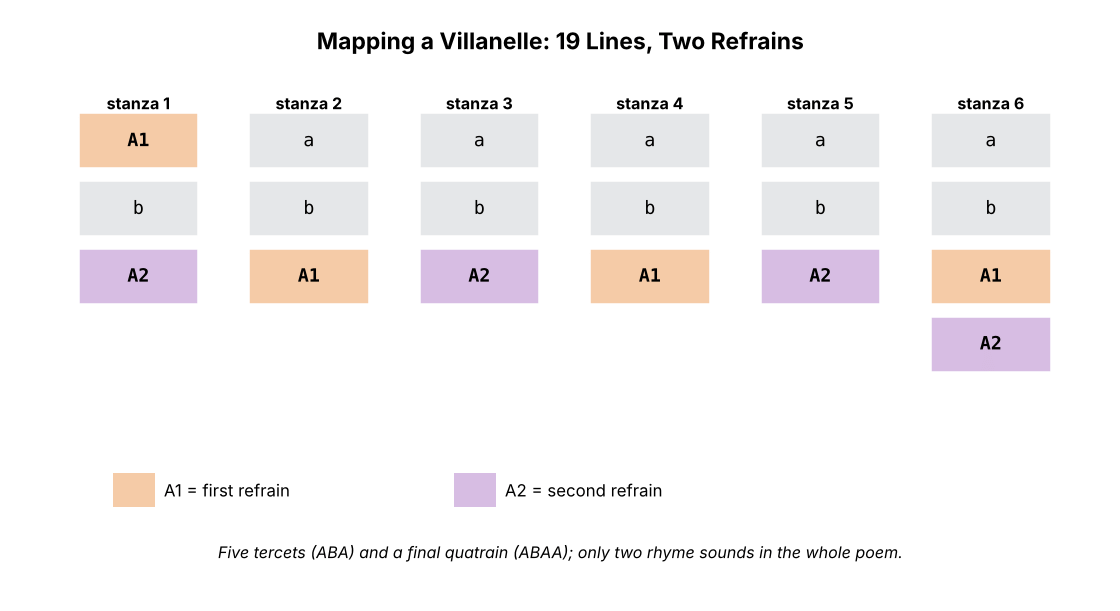
| Type | What Repeats | Example |
|---|---|---|
| Anaphora | The same word or phrase at the beginning of lines or clauses | “It was the best of times, it was the worst of times” |
| Epistrophe | The same word or phrase at the end of lines or clauses | “government of the people, by the people, for the people” |
| Refrain | A line or lines at regular intervals | “Nevermore” in “The Raven” |
| Parallelism | The same grammatical structure | “I came, I saw, I conquered.” |
| Epizeuxis | A word repeated immediately | “Water, water, every where” |
The anaphora example opens Charles Dickens’s novel A Tale of Two Cities (1859), and the epistrophe example comes from Lincoln’s Gettysburg Address (1863). Both show that repetition is as powerful in prose and speeches as in poems.
Worked Example: Frost’s Final Lines
Robert Frost’s “Stopping by Woods on a Snowy Evening” (1923) ends:
And miles to go before I sleep,
And miles to go before I sleep.
- Repetition: the same line appears twice.
- First time: it sounds literal: the speaker has a long way to travel before going to bed.
- Second time: it sounds heavier. “Sleep” can suggest rest at the end of life, and “miles to go” can suggest the duties and years still ahead.
- Effect: the repetition slows the ending, creates a dreamy, reflective mood, and invites a deeper reading.
Why does this matter? Repeated words do not mean exactly the same thing each time. Context, position, and accumulated meaning change them. Strong analysis explains how a repeated line shifts.
Effects of Repetition
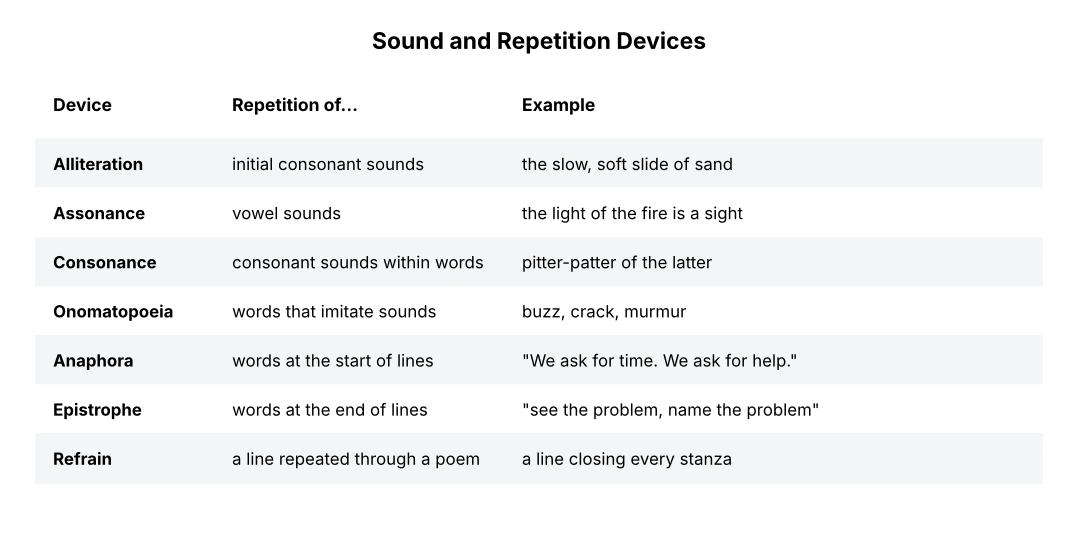
- Emphasis: highlights a key word or idea.
- Rhythm and musicality: creates a beat, like a song’s chorus.
- Memory: makes lines easy to remember, which mattered in oral traditions.
- Building emotion: each repetition can increase intensity, as in “The Raven.”
- Unity: ties together different parts of a poem.
- Obsession: can show a speaker who cannot stop thinking about something.
Repetition with Variation
Poets often repeat a line with a small change. In William Blake’s “The Tyger,” the first stanza asks what “immortal hand or eye” could frame the tiger’s “fearful symmetry.” The final stanza repeats the stanza almost exactly but changes “Could” to “Dare.” That one-word shift moves the question from whether creation is possible to whether anyone would have the courage to create such a creature. Watch closely for small differences between repeated lines; they often carry the poem’s turn.
Why does this matter? Test questions frequently ask about the effect of a repeated line. The best answers notice both what stays the same and what changes, and they connect the pattern to the poem’s theme.
Too Much Repetition?
In everyday writing, repetition can feel careless. In poetry and speeches, it is usually deliberate. When you see repetition in a poem, assume it was chosen on purpose and ask what the poet gains from it.
Test-Taking Strategies
Mnemonic Devices and Memory Shortcuts
“Anaphora is at the start; Epistrophe is at the end.” A refrain is a poem’s chorus.
Cross-Topic Connections
- A form built on refrains is Topic 2.11: Villanelles.
- Song-like refrains appear in Topic 2.10: Ballads.
- Sound repetition is covered in Topic 3.6: Alliteration, Assonance, and Consonance.
- Repetition in speeches is analyzed in Reading Skills Topic 2.9: Analyzing Rhetorical Devices.
Common Question Formats
- Identify the type of repetition used in a passage.
- Explain the effect of a refrain.
- Explain how a repeated line changes meaning.
- Distinguish anaphora from epistrophe.
Frequent Student Mistakes
- Confusing anaphora with epistrophe.
- Assuming a repeated line means exactly the same thing each time.
- Missing small word changes in repeated lines.
Test-Day Shortcuts
When a question asks about repetition, compare the first and last appearance of the repeated words. The difference in context usually reveals the answer.
Time Management Tips
Repetition questions on English unit tests and standardized reading tests such as the SAT and ACT take 20 to 40 seconds. Underline repeated words during your first read.