Urban Sustainability: AP® Human Geography Review
“Sustainability” has become a central concept in 21st-century urban planning. It promises a way to organize cities so they can keep functioning long-term —…

Free AP® Human Geography review: 90+ study guides by unit, practice questions and exam-day strategy in one place.
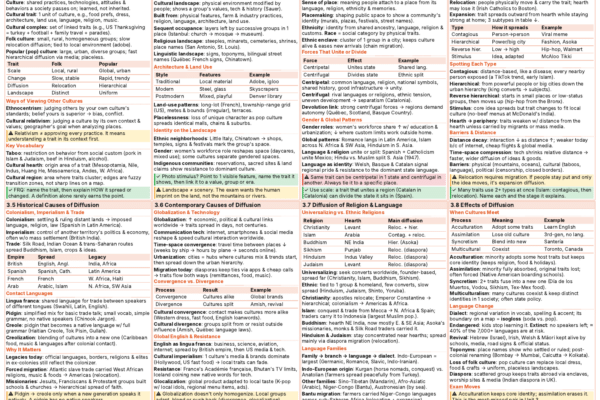
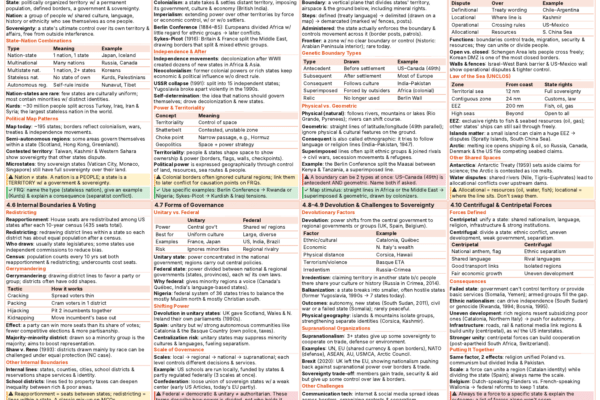
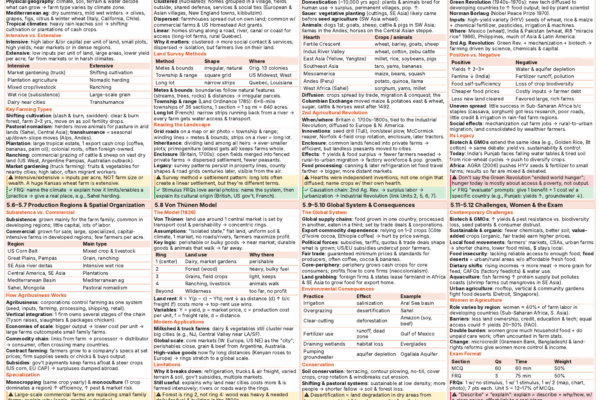
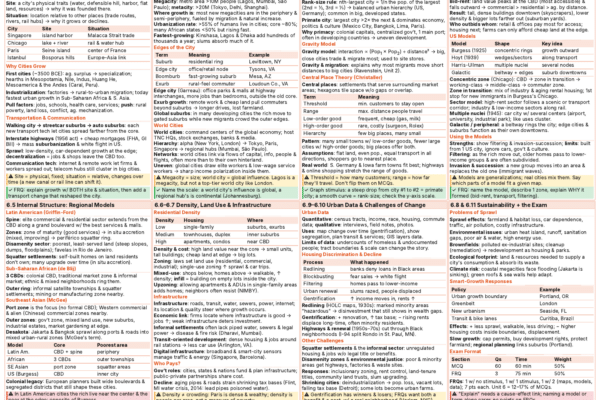
“Sustainability” has become a central concept in 21st-century urban planning. It promises a way to organize cities so they can keep functioning long-term —…
Cities now hold more than half of humanity and are projected to hold nearly 70% by 2050. They consume roughly 75% of the world’s…
Cities have always been engines of opportunity — and arenas for conflict. The 21st-century city is no exception. Today’s urban regions face the simultaneous…
The food on your plate has probably traveled farther than you have this year. Coffee from Colombia, bananas from Ecuador, soy from Brazil, wheat…
Modern agriculture feeds eight billion people on far less cropland per person than the world used a century ago. That accomplishment came with serious…

Development and Environmental Degradation The relationship between economic development and environmental impact follows a clear pattern. In early development stages, countries focus on industrialization…

International trade shapes your country’s prosperity and determines development patterns worldwide. On the AP® Human Geography exam, Topic 7.6 shows up regularly as multiple-choice…
The global economy has fundamentally transformed how and where economic activities happen. You’re studying Topic 7.7: Changes as a Result of the World Economy…

How do geographers measure whether a country is “developed”? This question sits at the heart of Unit 7 (Industrial and Economic Development Patterns and…
The Industrial Revolution is one of the most consequential geographic transformations in human history, fundamentally reshaping where people live, how economies function, and the…
**Development theory** explains how and why countries become wealthier, more industrialized, and connected to the global economy. But “development” means different things: higher GDP?…
Smart cities represent one of the most significant technological transformations of the 21st century. As urbanization accelerates—by 2050, nearly 68% of the global population…